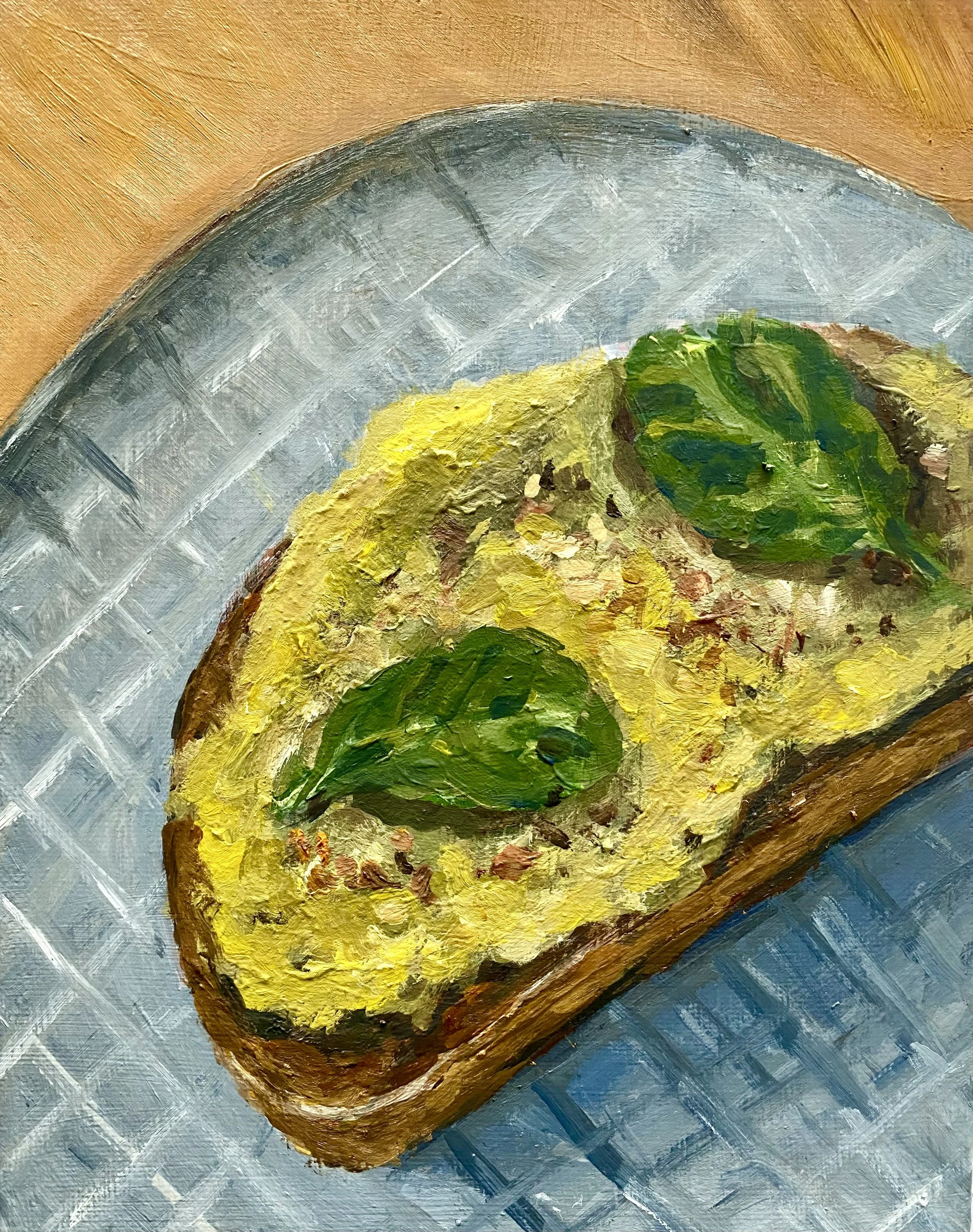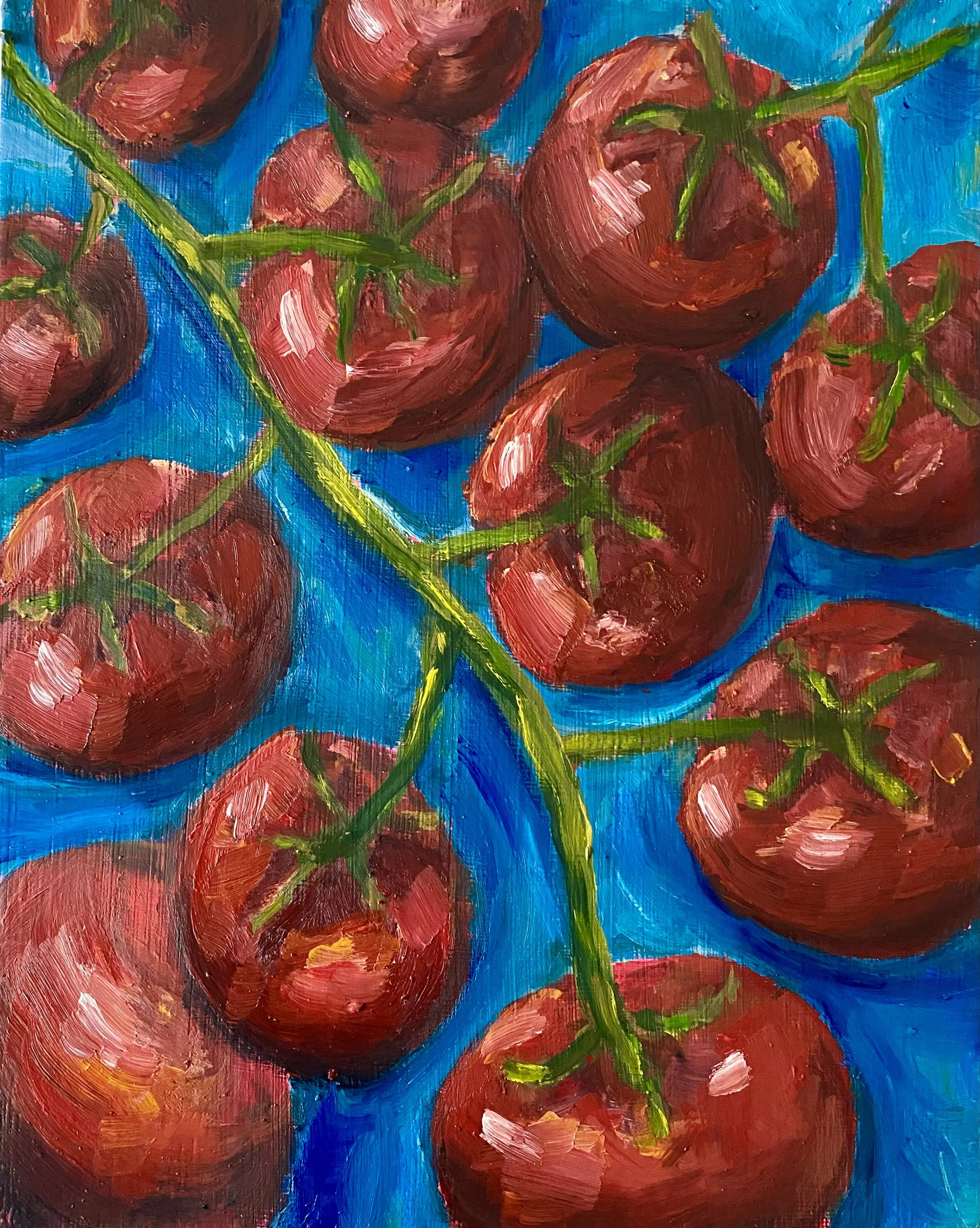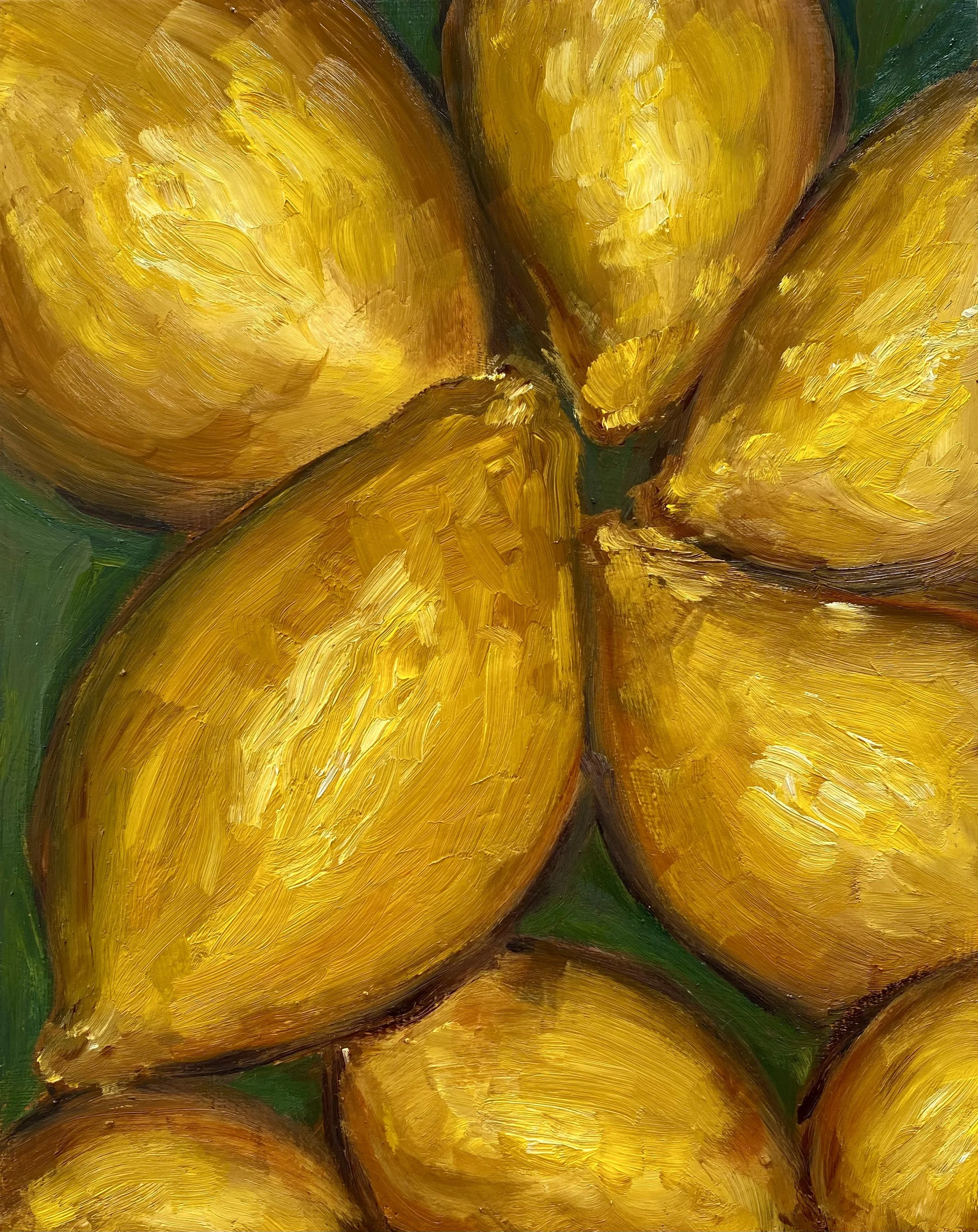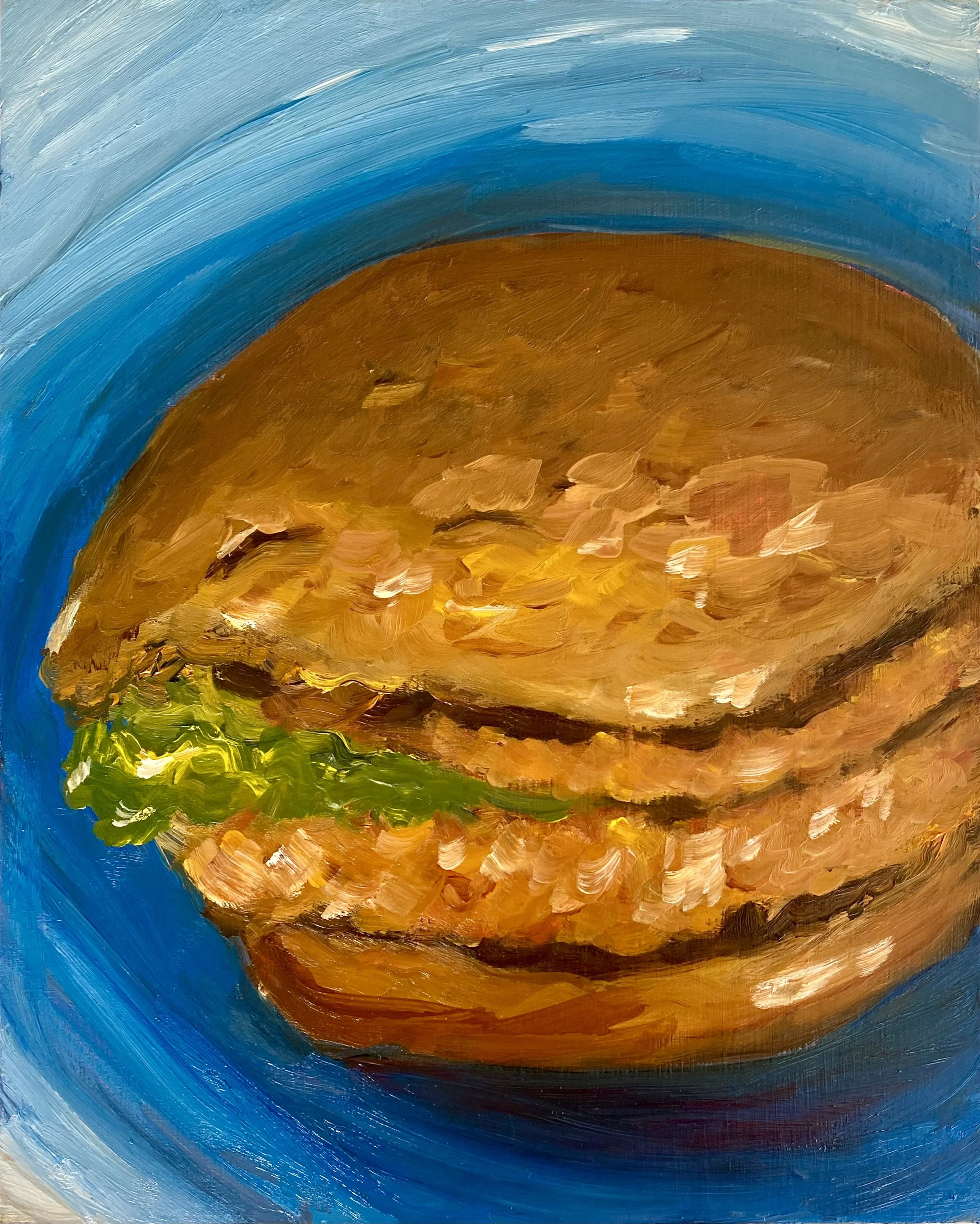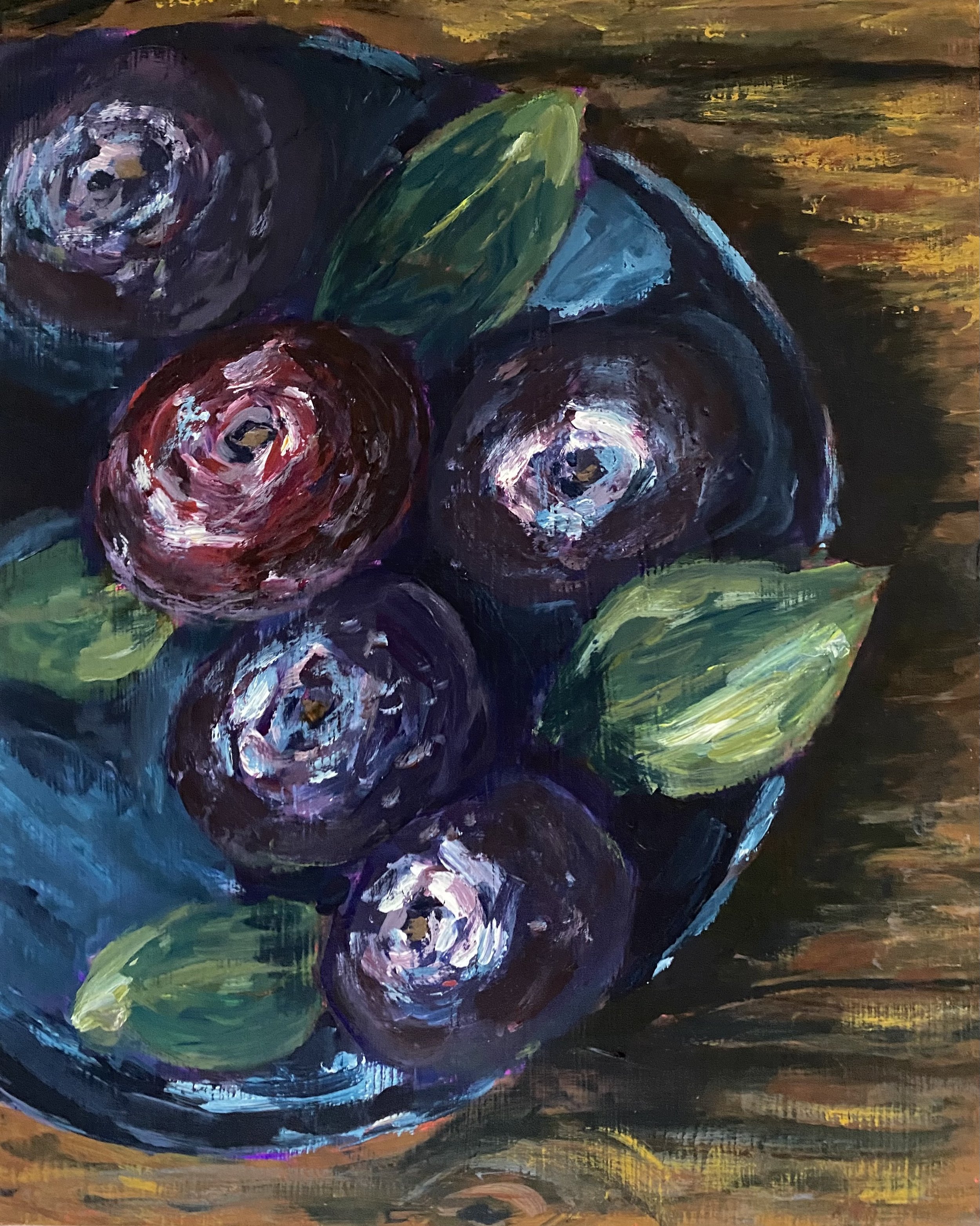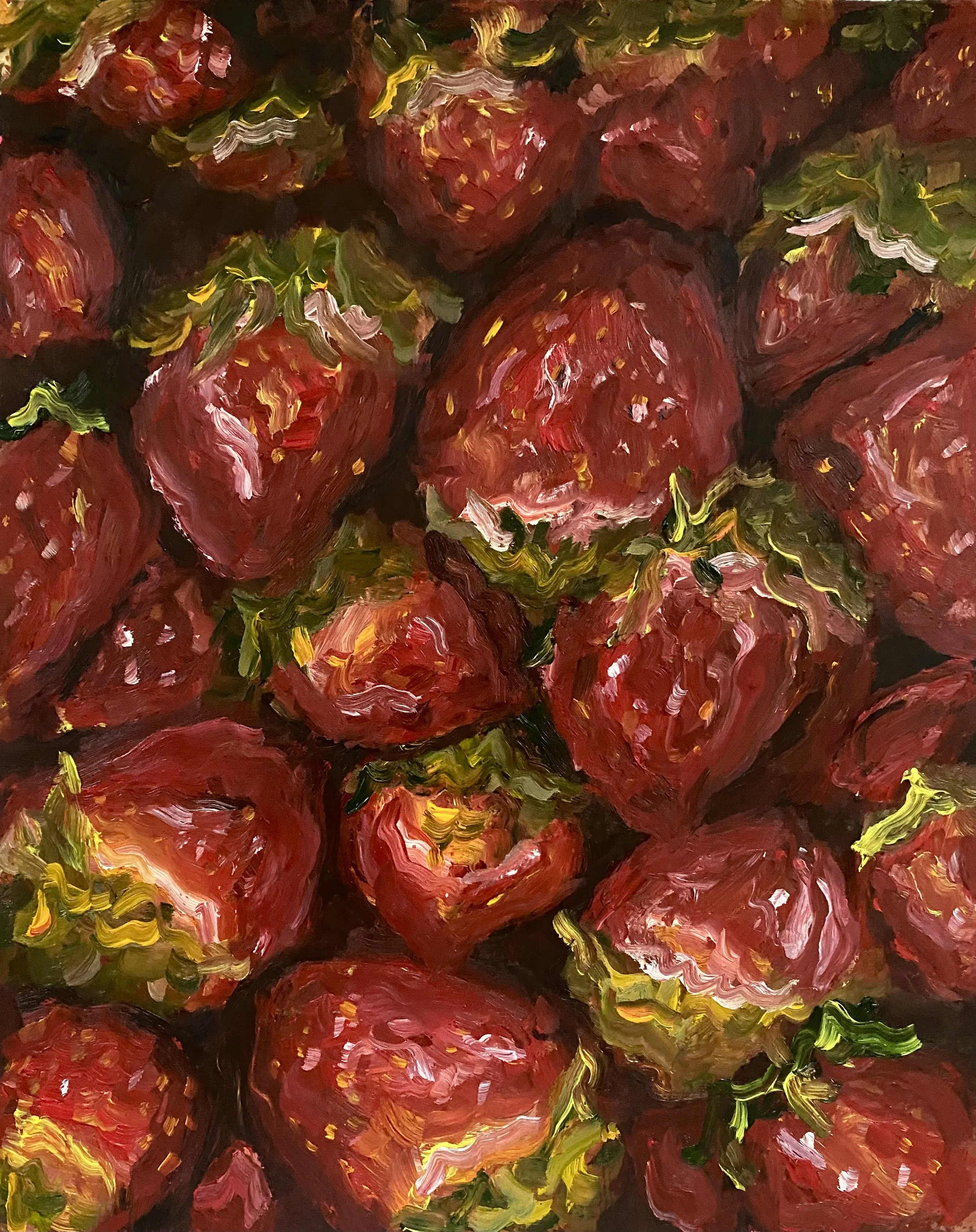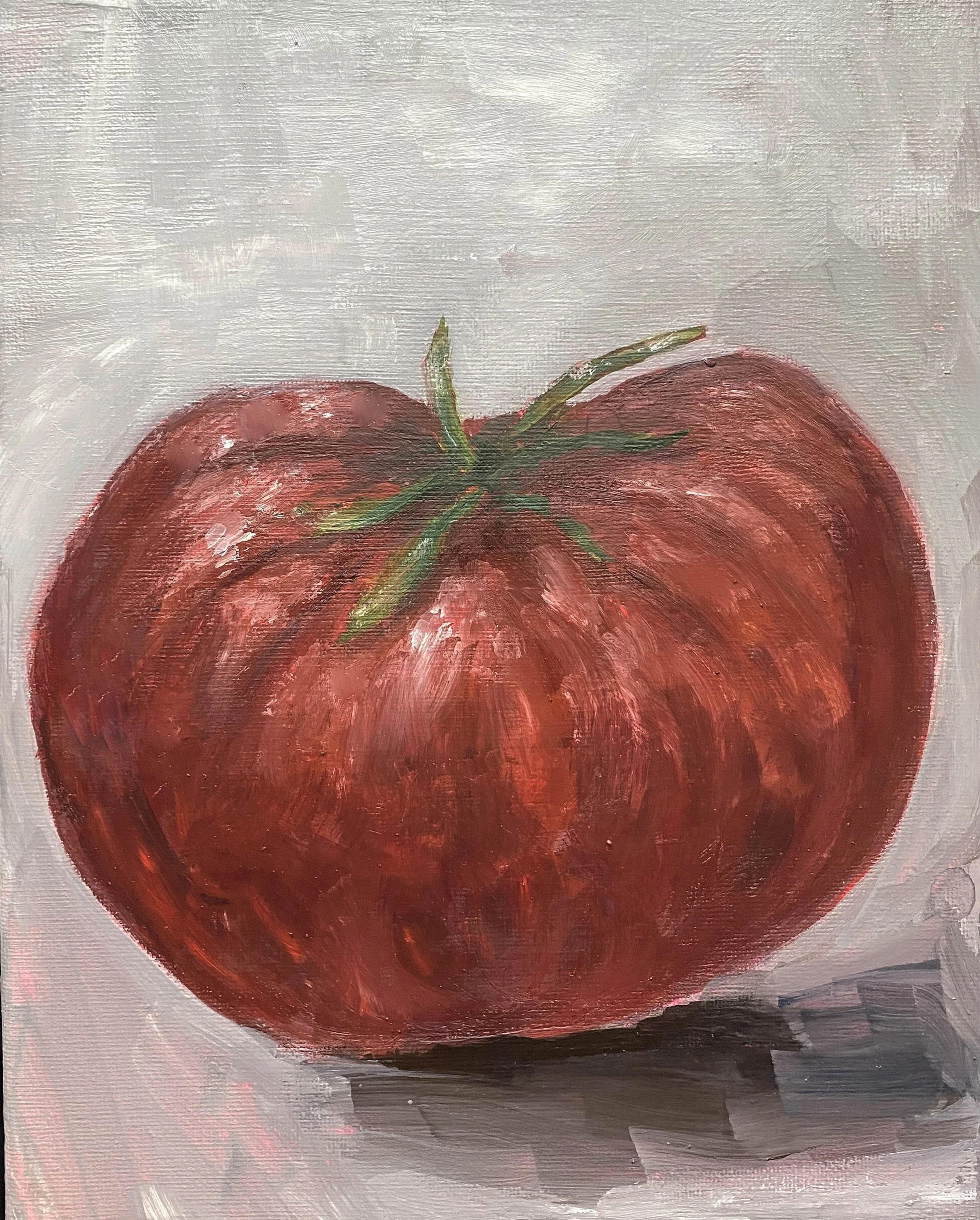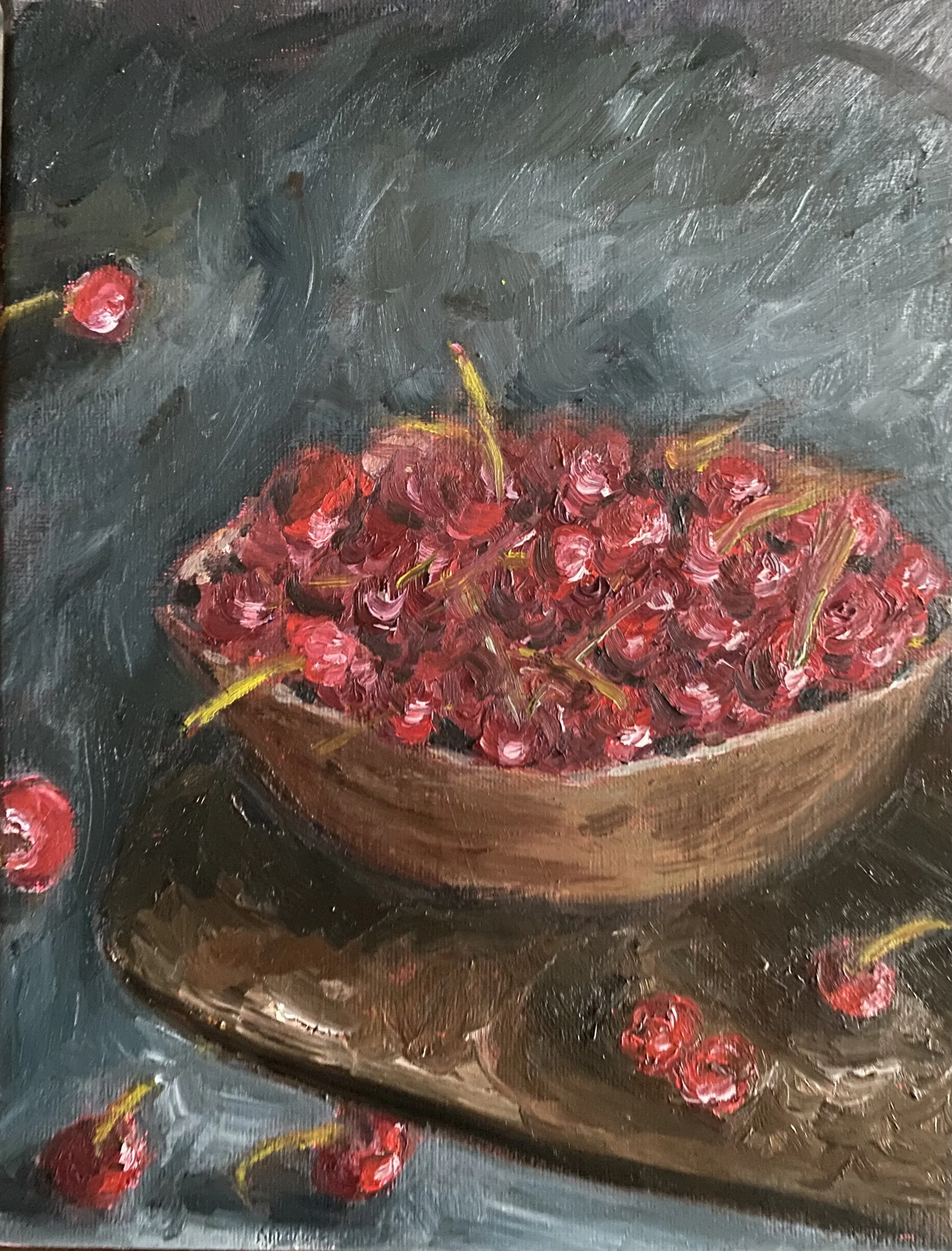
“This Sweet Simple Existence”- January 2026- A Year of Daily Painting
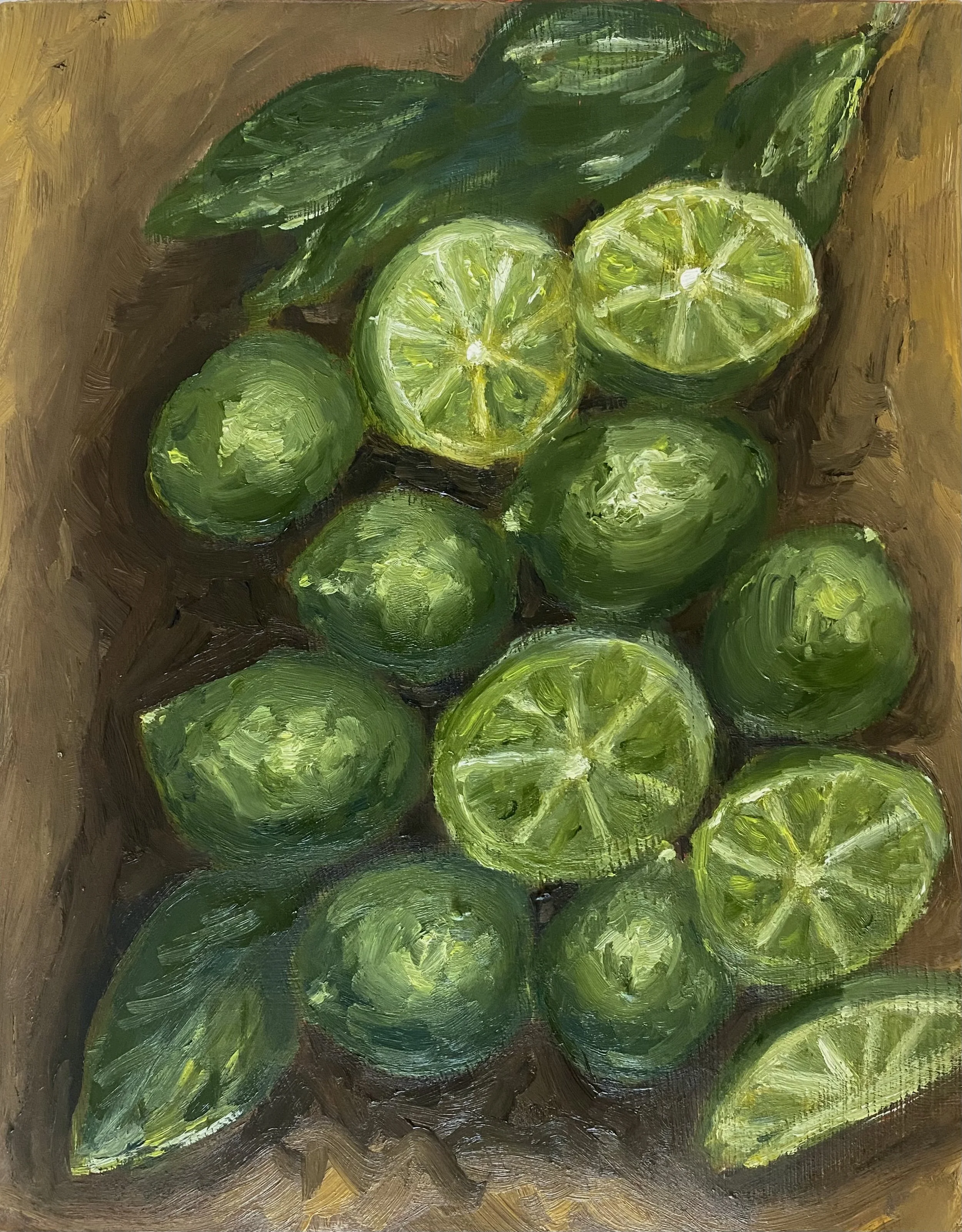
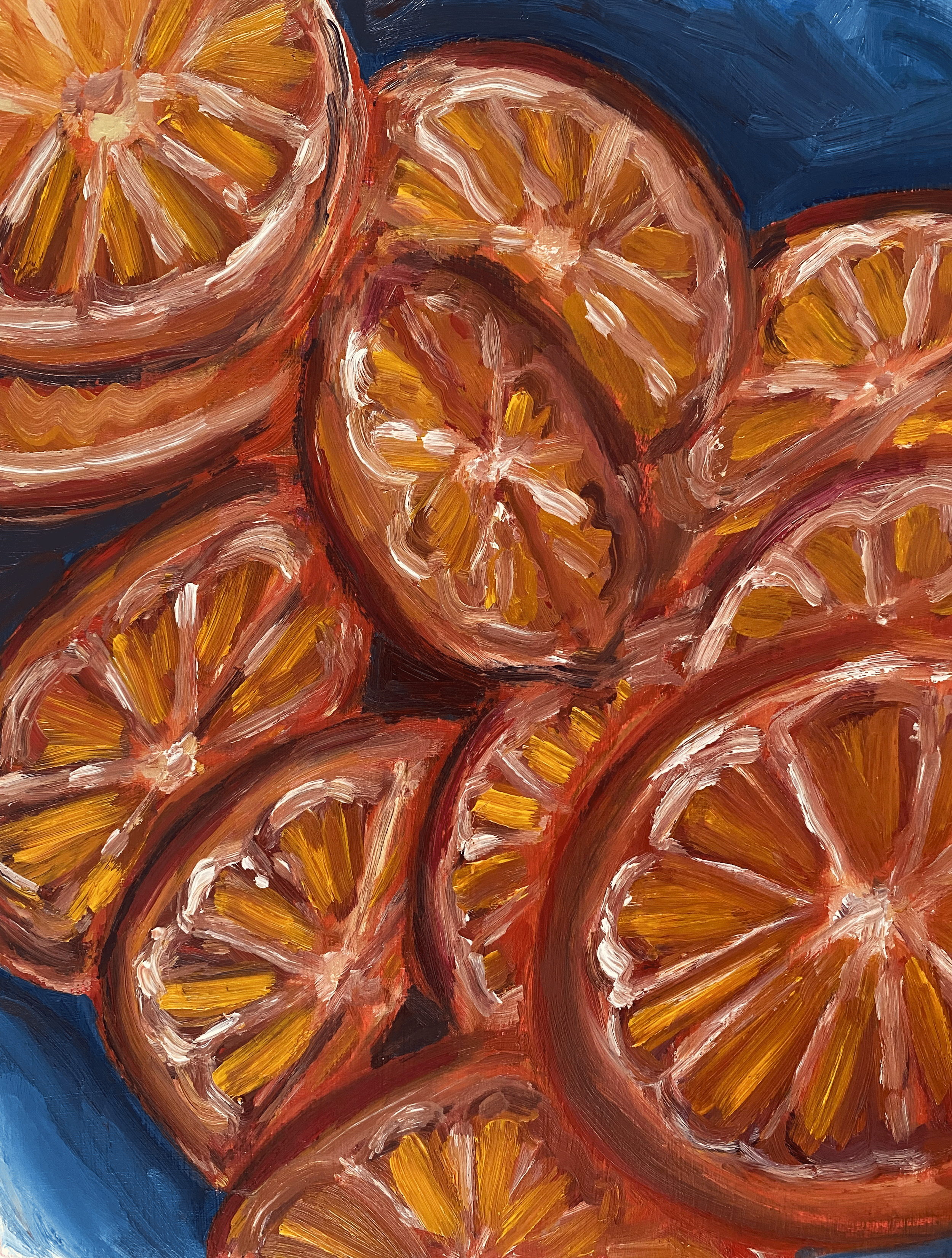
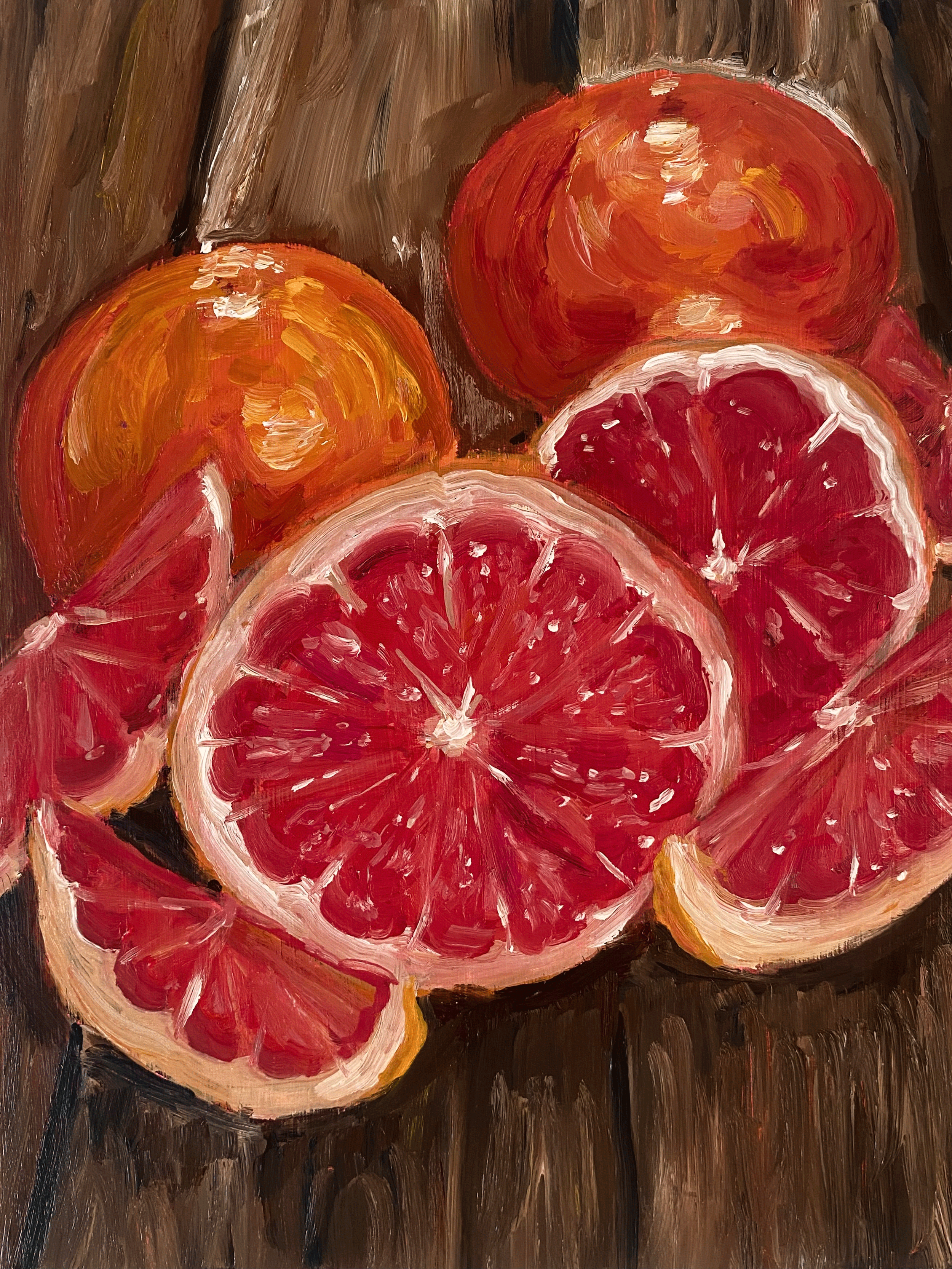
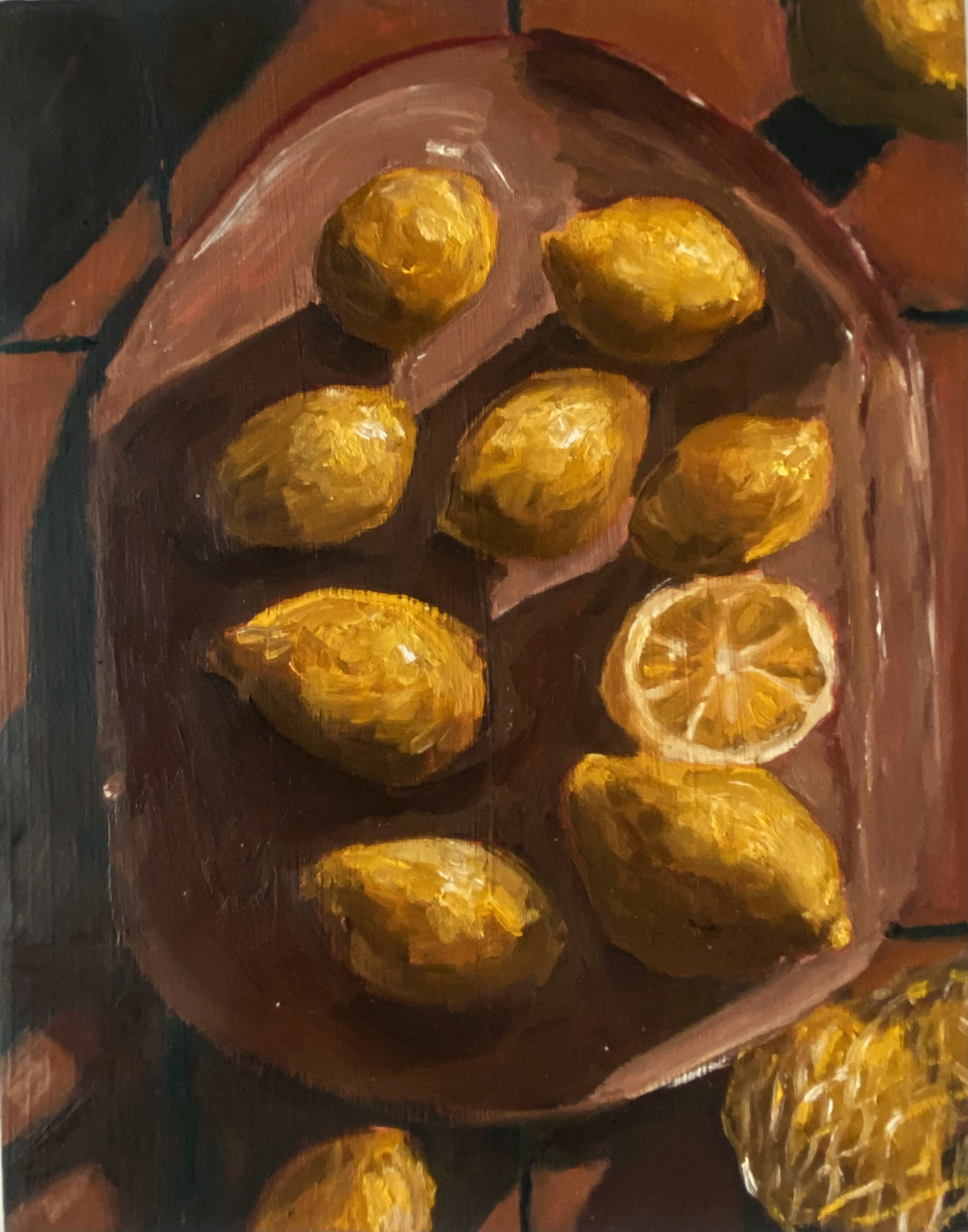
Late last year, I had decided to embark on a rather daunting project. I would make 2026 my year of living creatively, my year of daily painting, a personal art project called “This Sweet Simple Existence” focused on painting objects (whether still life, food, household objects, etc), images and scenes from everyday life to showcase the magical and extraordinary in the seemingly mundane daily existence. The idea was inspired by Carol Marine’s book “Daily Painting: Paint Small and Often to Become a More Creative, Productive and Successful Artist”, where the author talks about creating small works of art on a daily basis (a painting a day), a way to improve technique, develop style and most of all combat the “perfectionism” scourge and revive the love of painting. I’ve practiced versions of this in the past where I’ve done the 100 heads challenge and inktober (birdtober), over the course of a month or so each, and previously just daily sketching in my sketchbook. I have noticed improvements specifically in the confidence and ease with which my hand moved across the canvas or paper and in the looseness of my paintings. However, doing it for a whole year is a huge undertaking.
So I decided to give it a structure and context so I’m not scrambling everyday wondering what to paint. I got the idea of building on my previous series "Ordinary Days", a body of work that reflects my lived experience and artistic evolution through the quiet observations of everyday life. Over the course of one year, I will commit to producing small-scale daily paintings (on canvas, wood panels and paper of sizes ranging from 6" by 6" to no larger than 12" by 12", using a variety of mediums: acrylic, oils, watercolor, gouache, ink and charcoal — focusing on still life, domestic environments, landscapes, and moments drawn directly from my daily routine, or memories or objects evoke nostalgia. The idea behind it is not only to develop style but also to explore and advance my command of value, color relationships, composition, and atmospheric depth and hopefully see progress in the mastery of a more impressionist style of painting, using techniques such as the capture of form though loose dynamic brushstrokes, color, soft edges, perspective. These small daily paintings will hopefully improve intuitive decision-making and new formal strategies, guiding both the refinement of technique and expressive voice. Sometimes I would work in series, but I will also create standalone pieces. Throughout the year, I will document and share completed works on the Daily Paint Works platform, my shop and my social channels (Instagram, Facebook and Tiktok)— extending visibility, engaging with the broader artistic community, and exploring strategies for professional growth and monetization.
At the end of each month, I would take stock of my creative practice, review my progress and daily painting experience that I created in a monthly blog post. I will also do quarterly reviews in March, June, September and December 2026. As mentioned I will work in series but also create one off pieces, the subject matter and the choice of mediums will be just as arbitrary and random. Some months I might work purely in oils, some months, my practice might be more relaxed, in a sketchbook with watercolors, ink, pastels, or gouache.
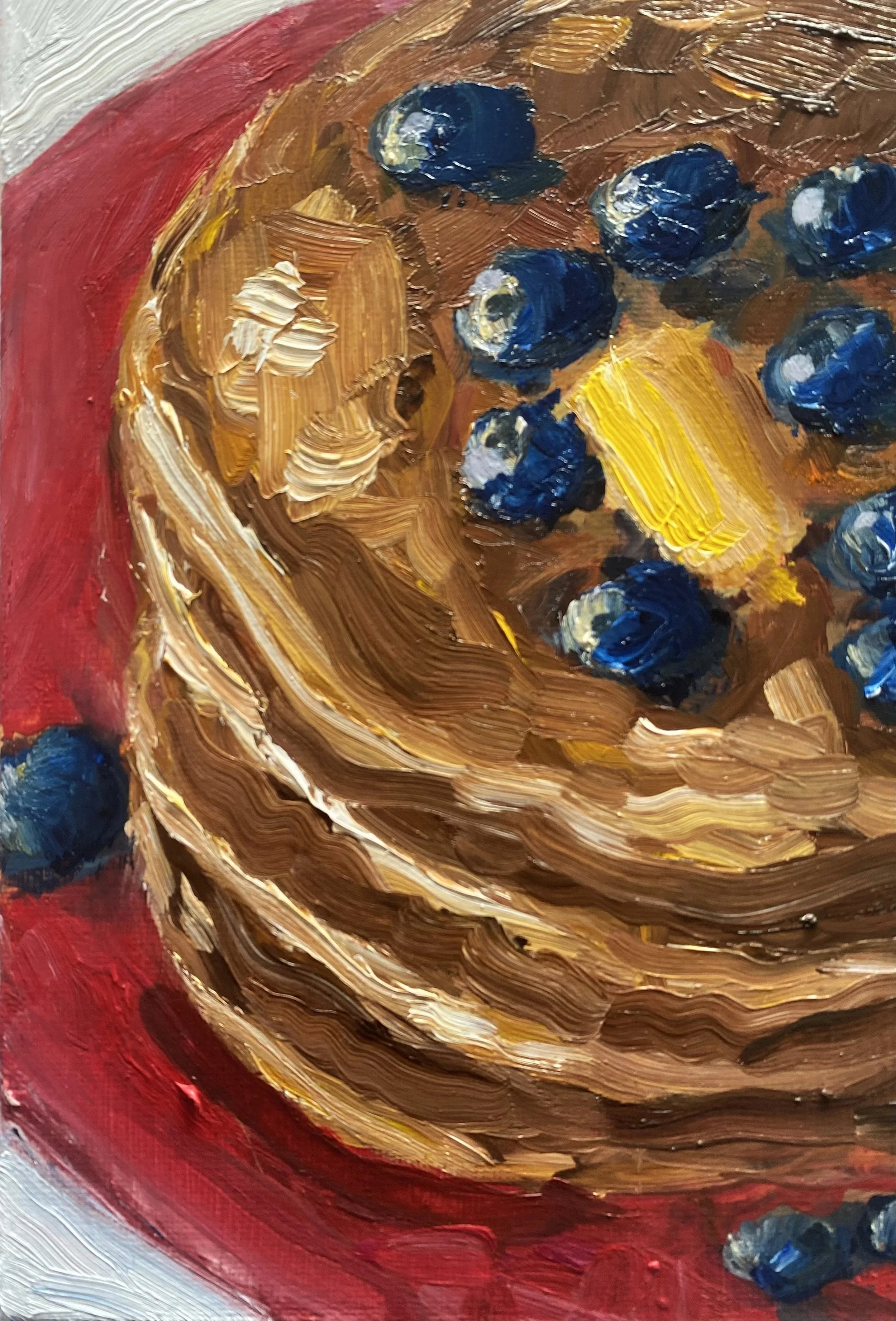
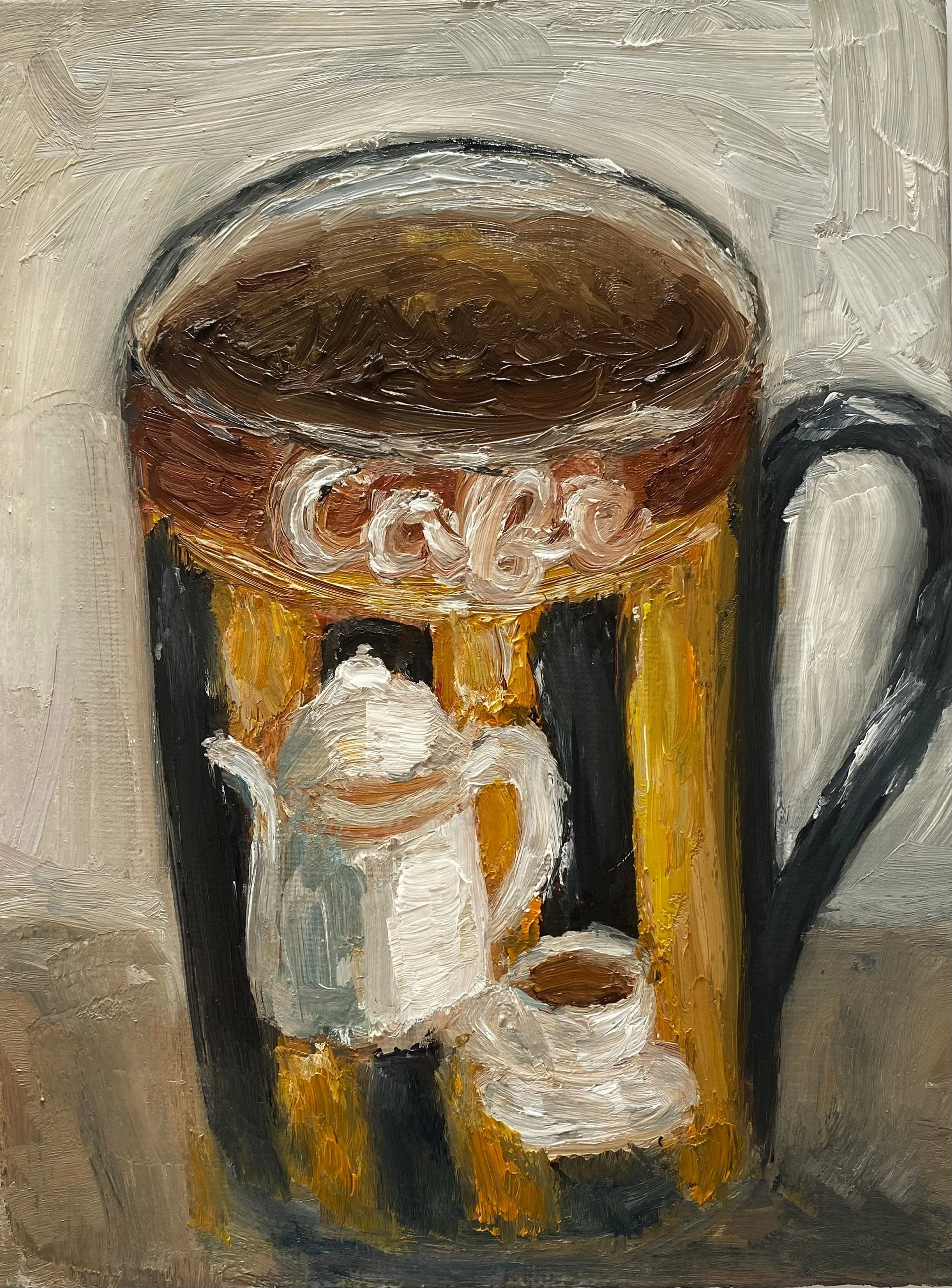
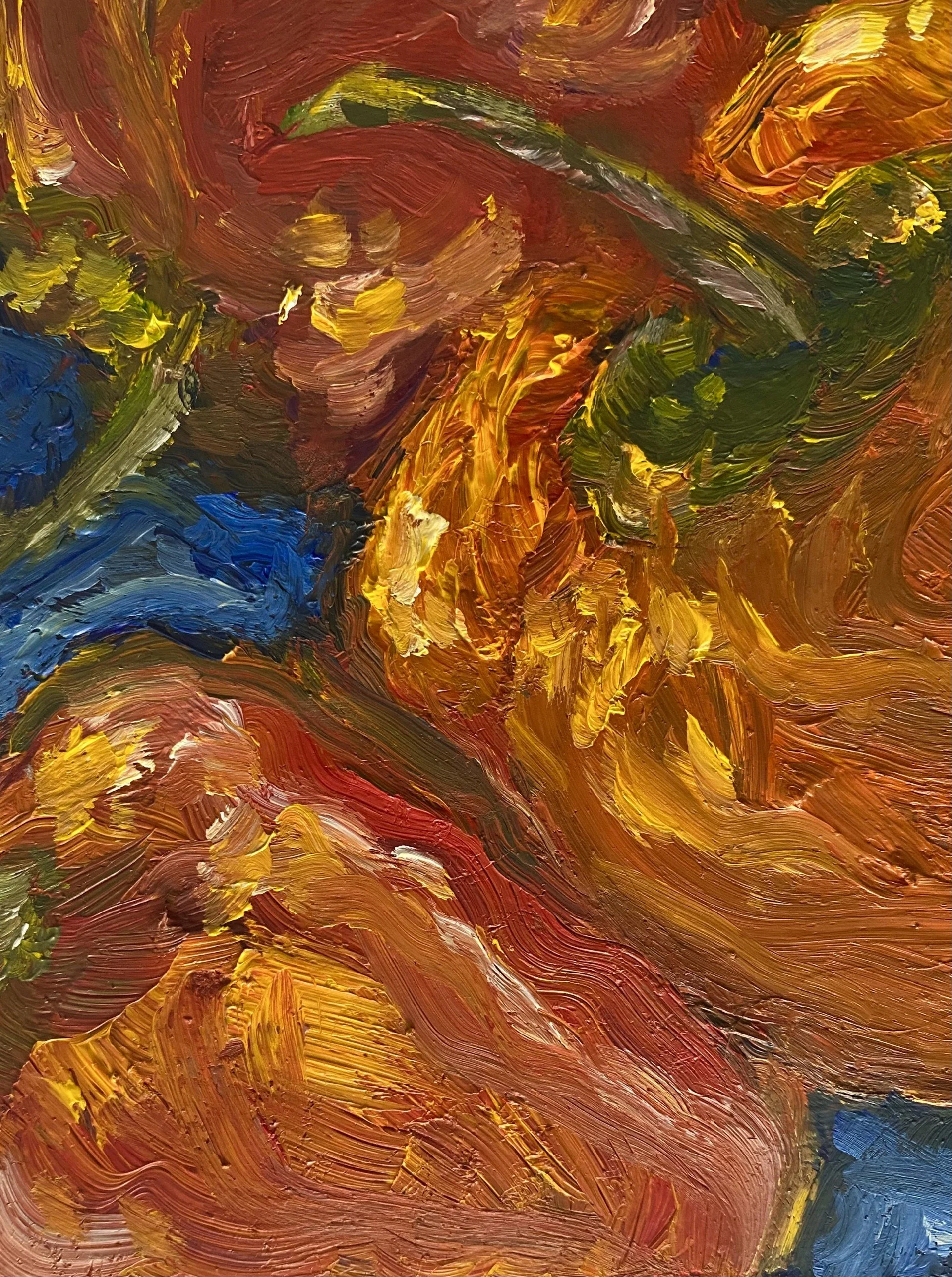
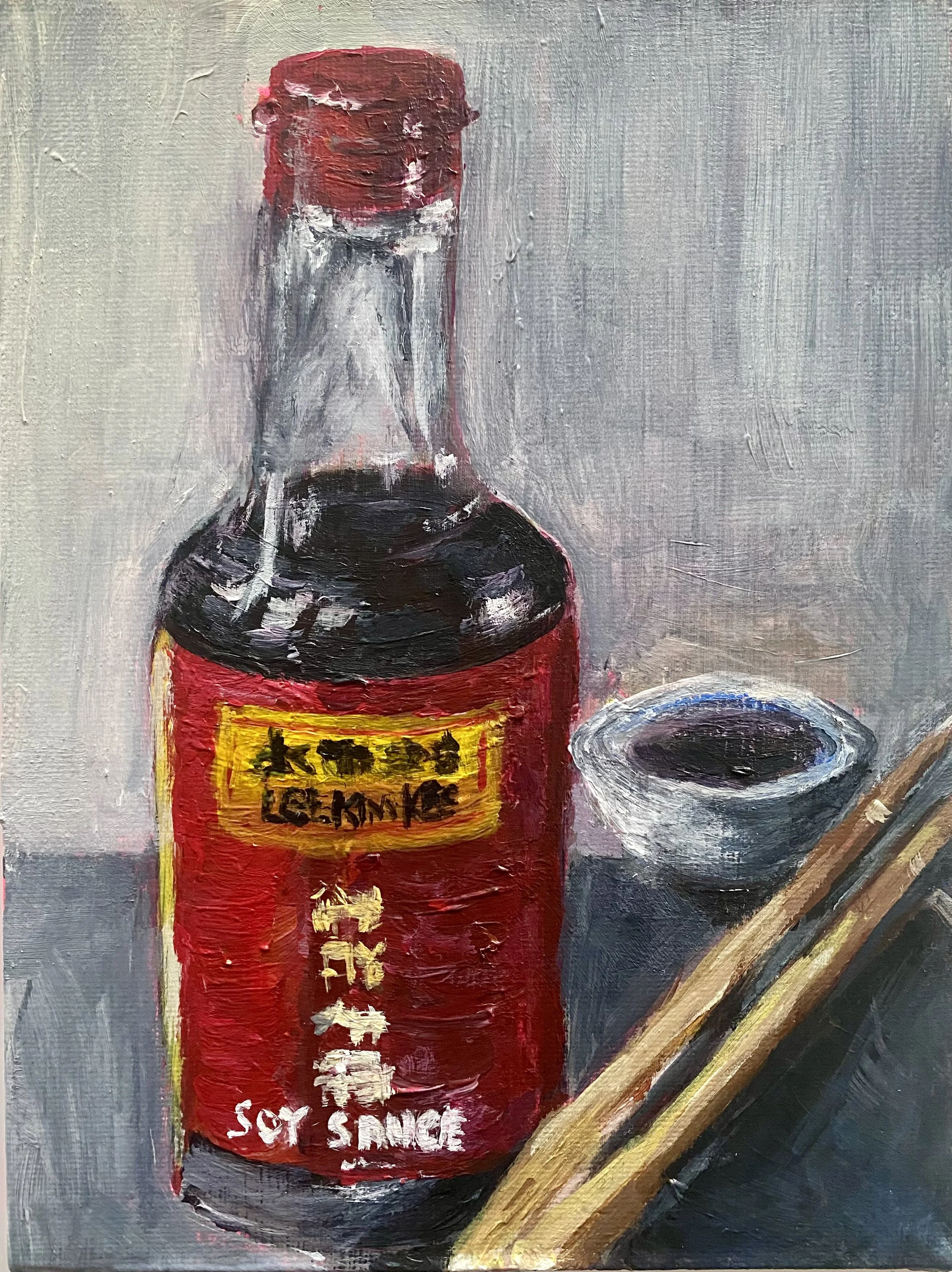
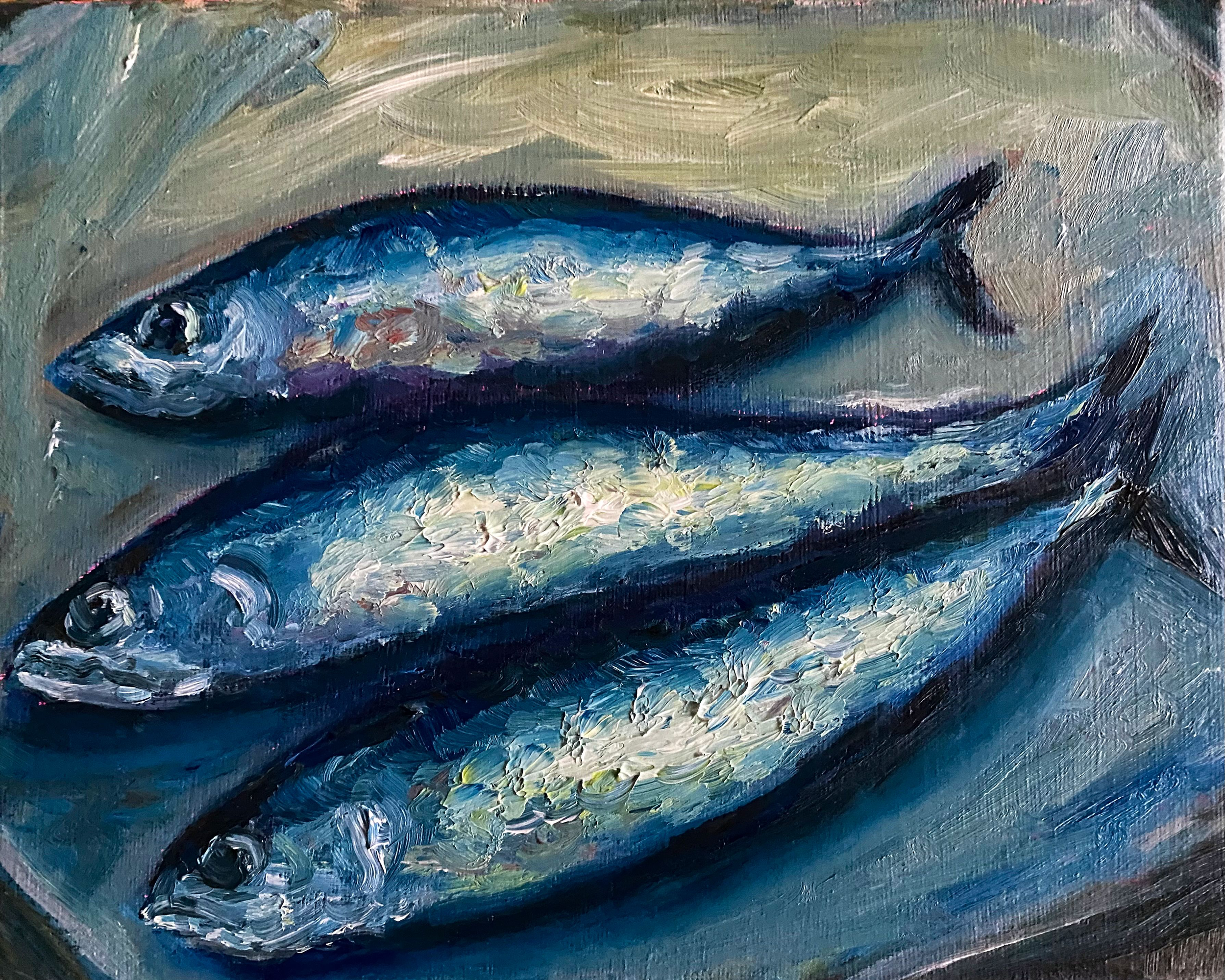
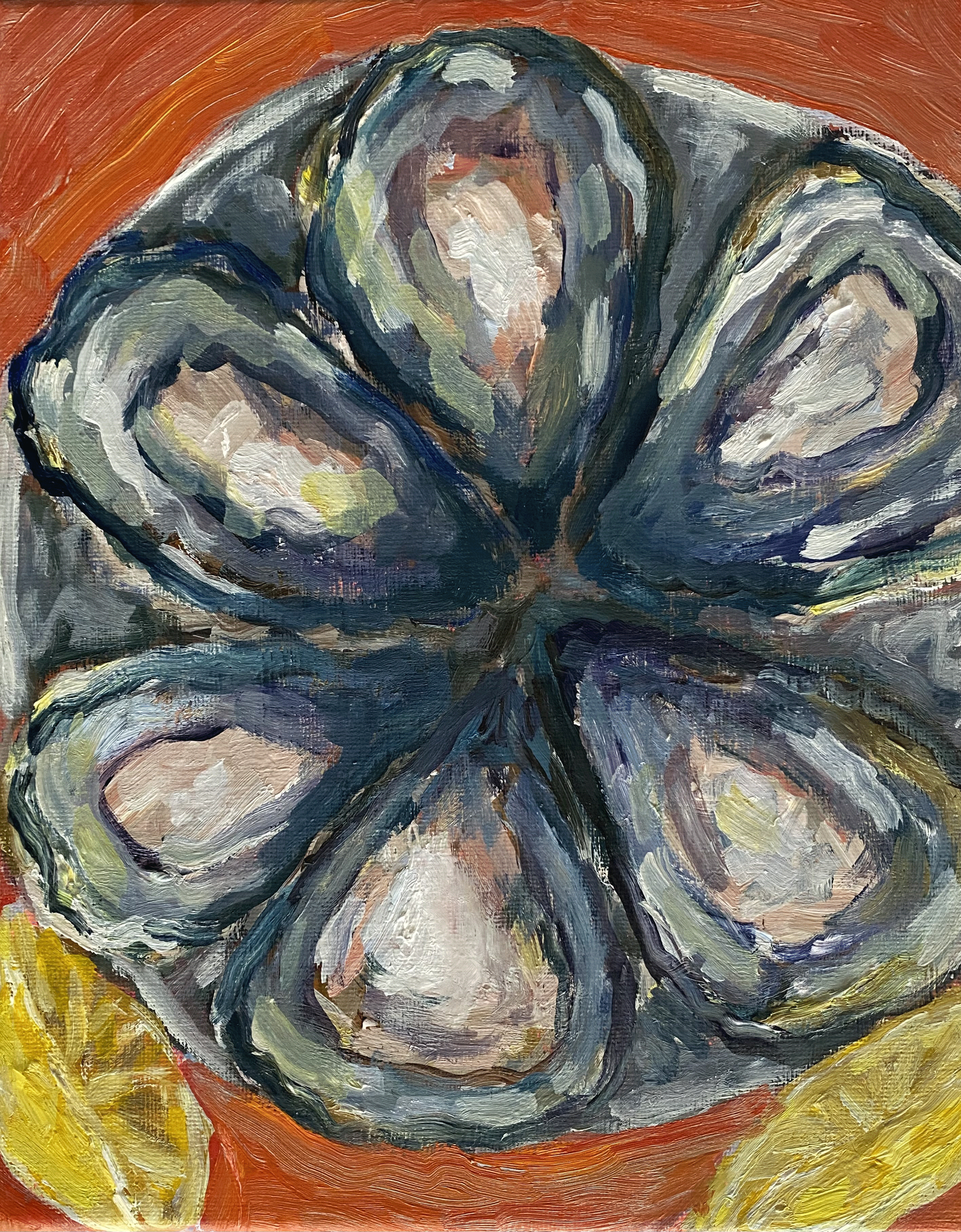
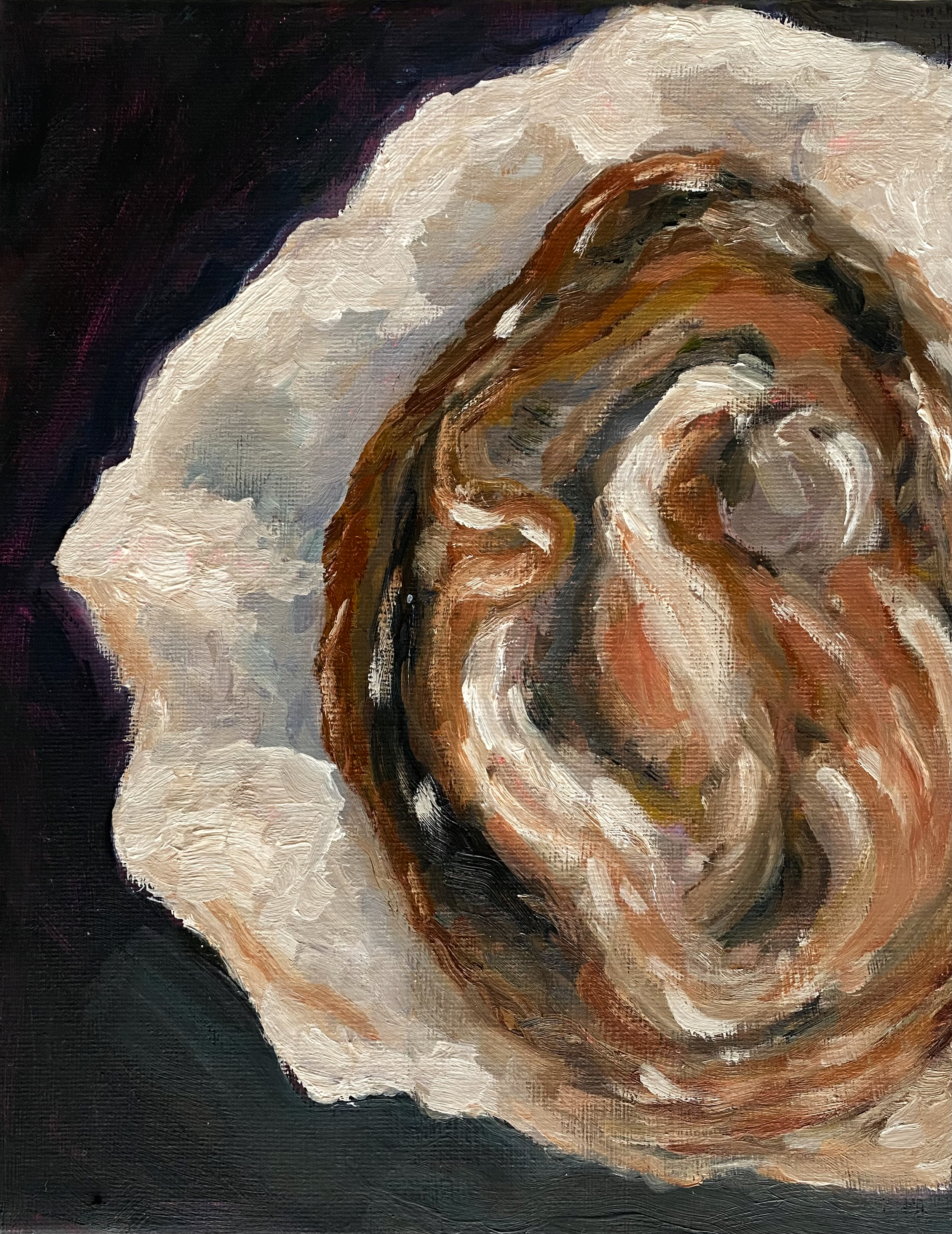
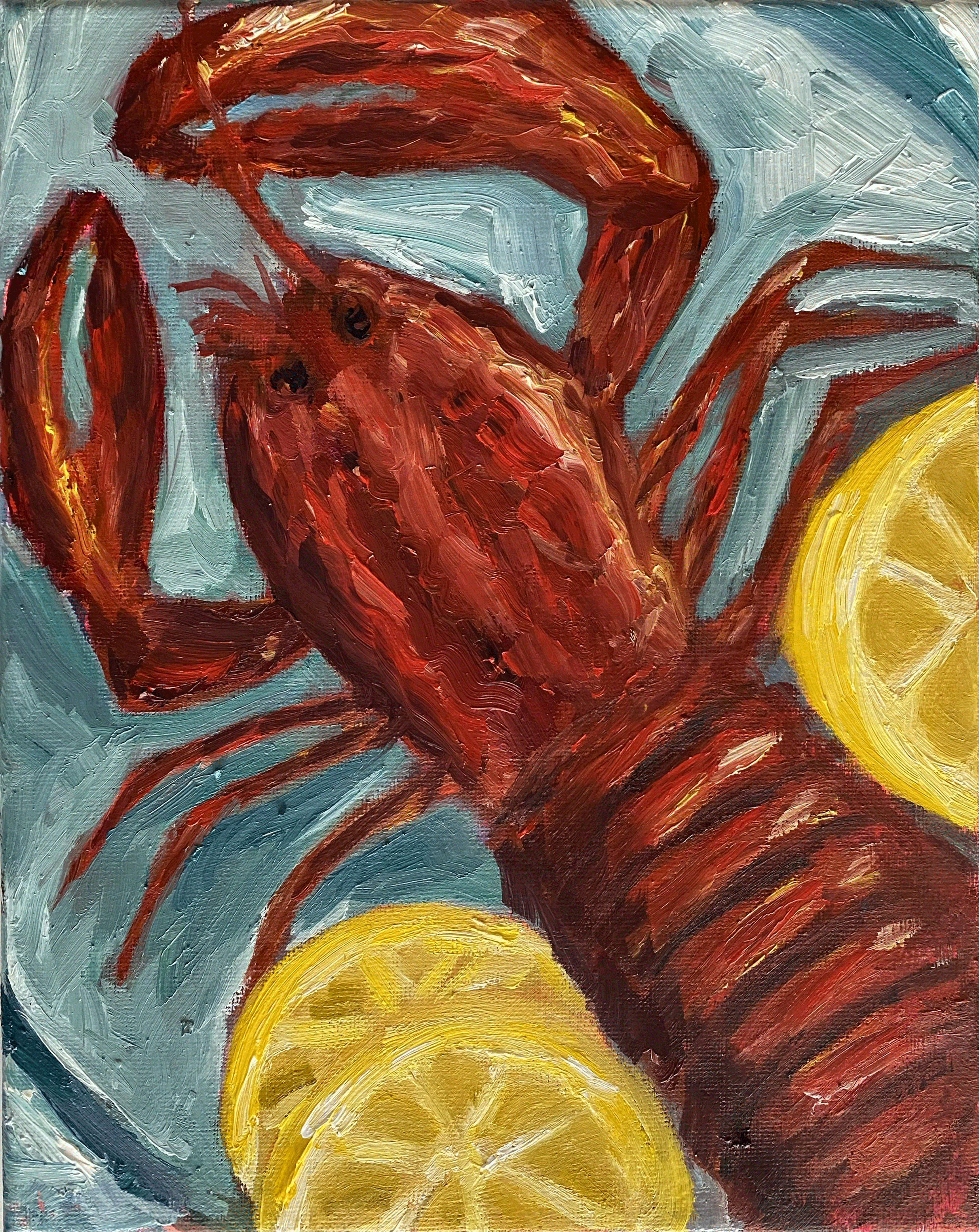
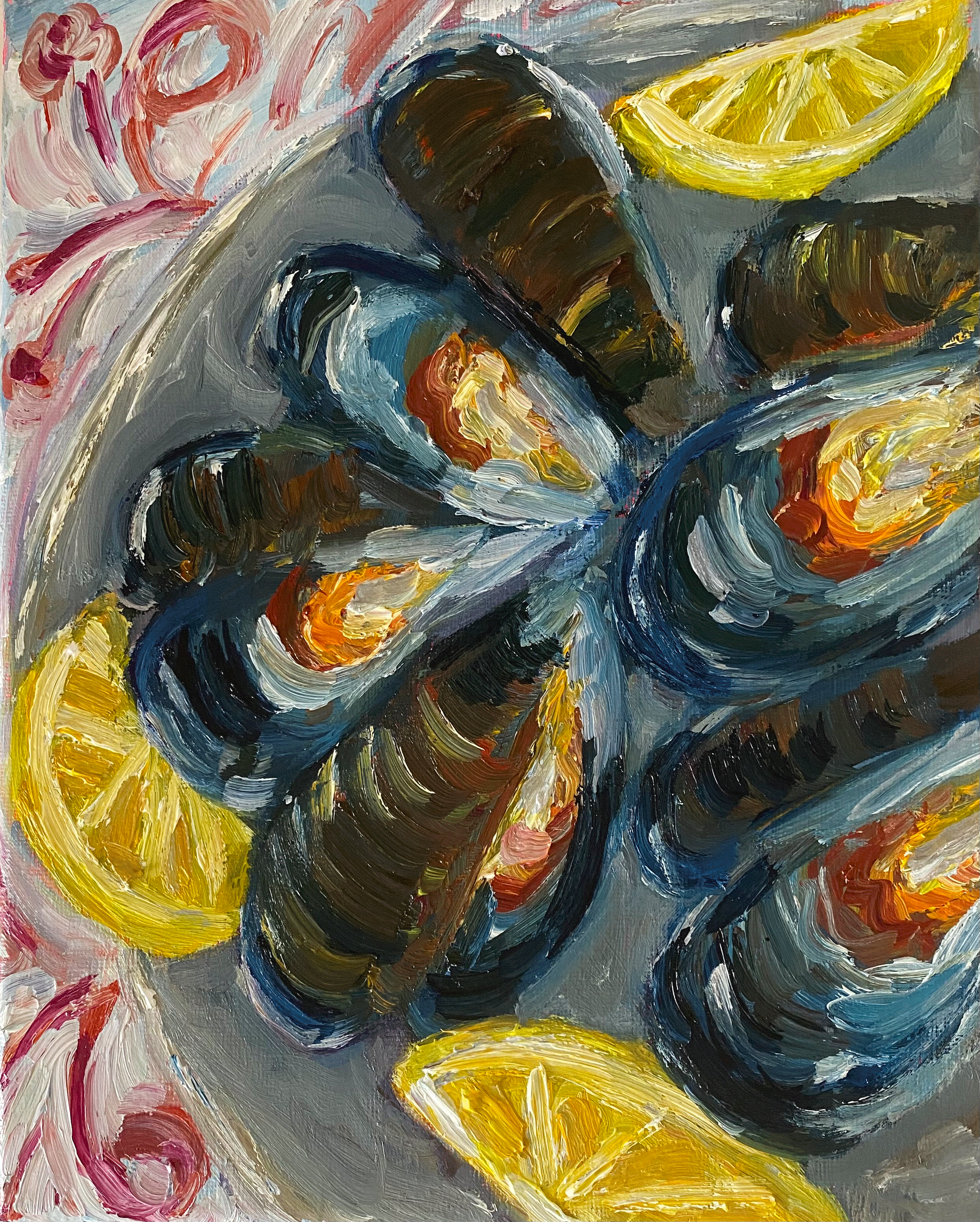
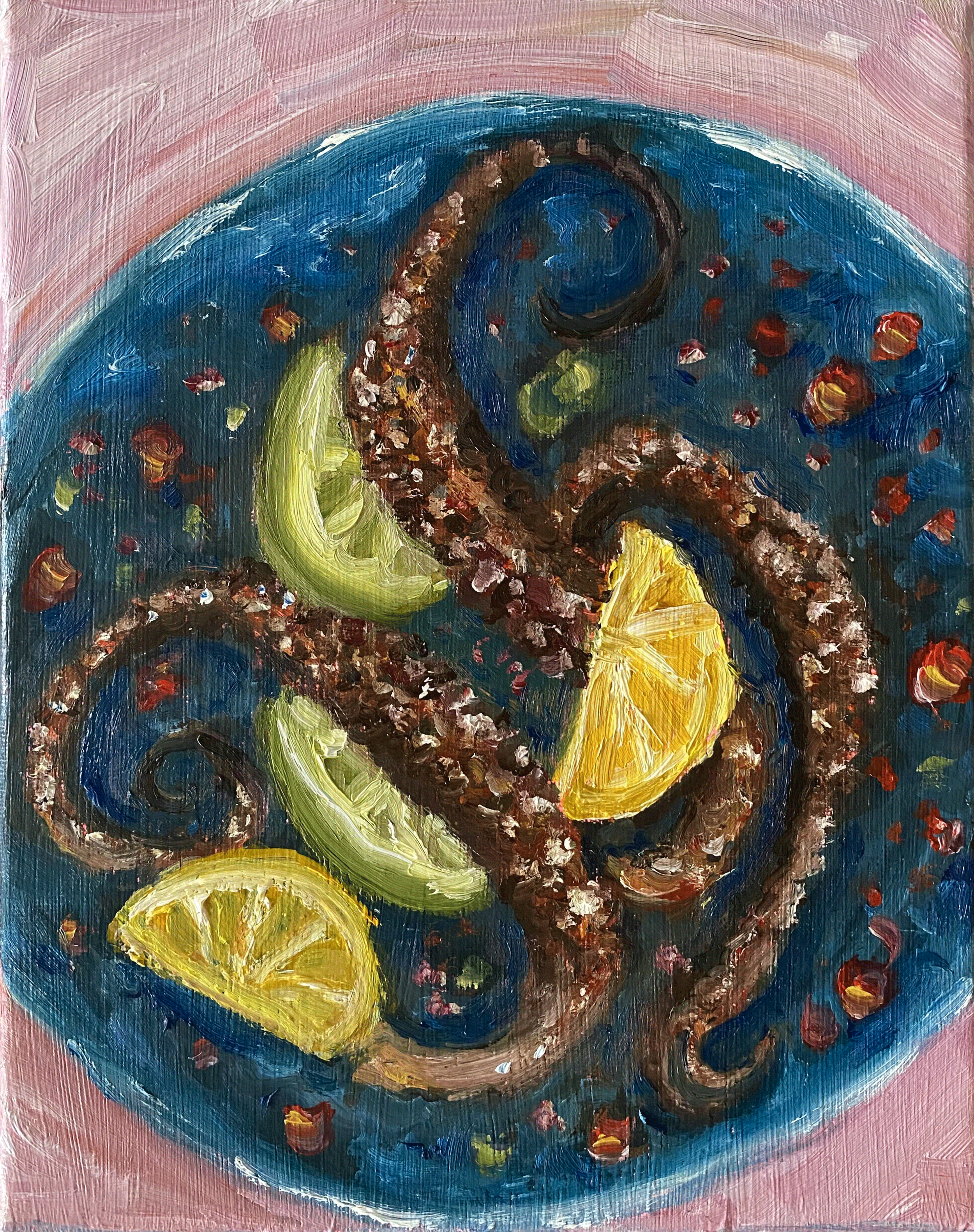
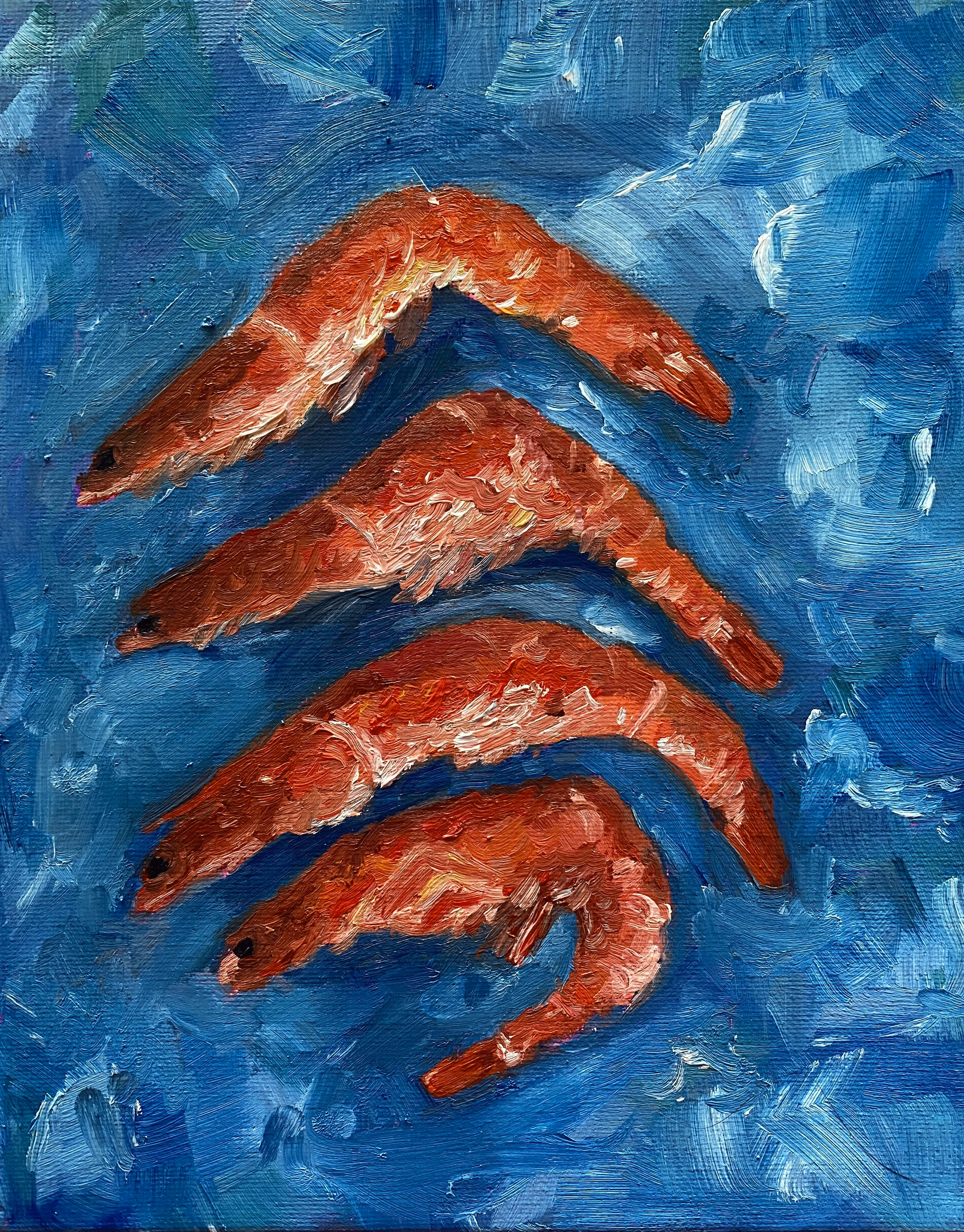
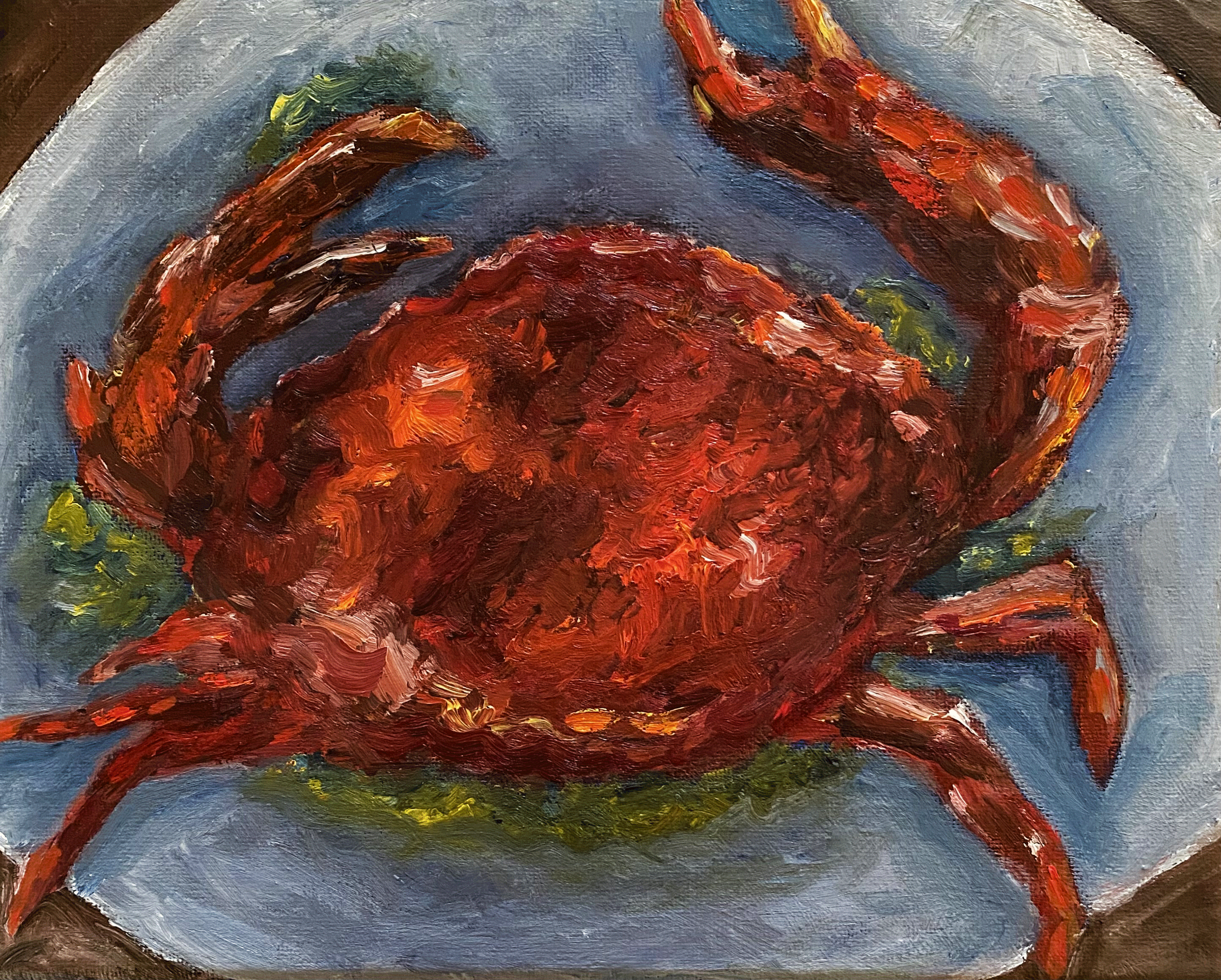
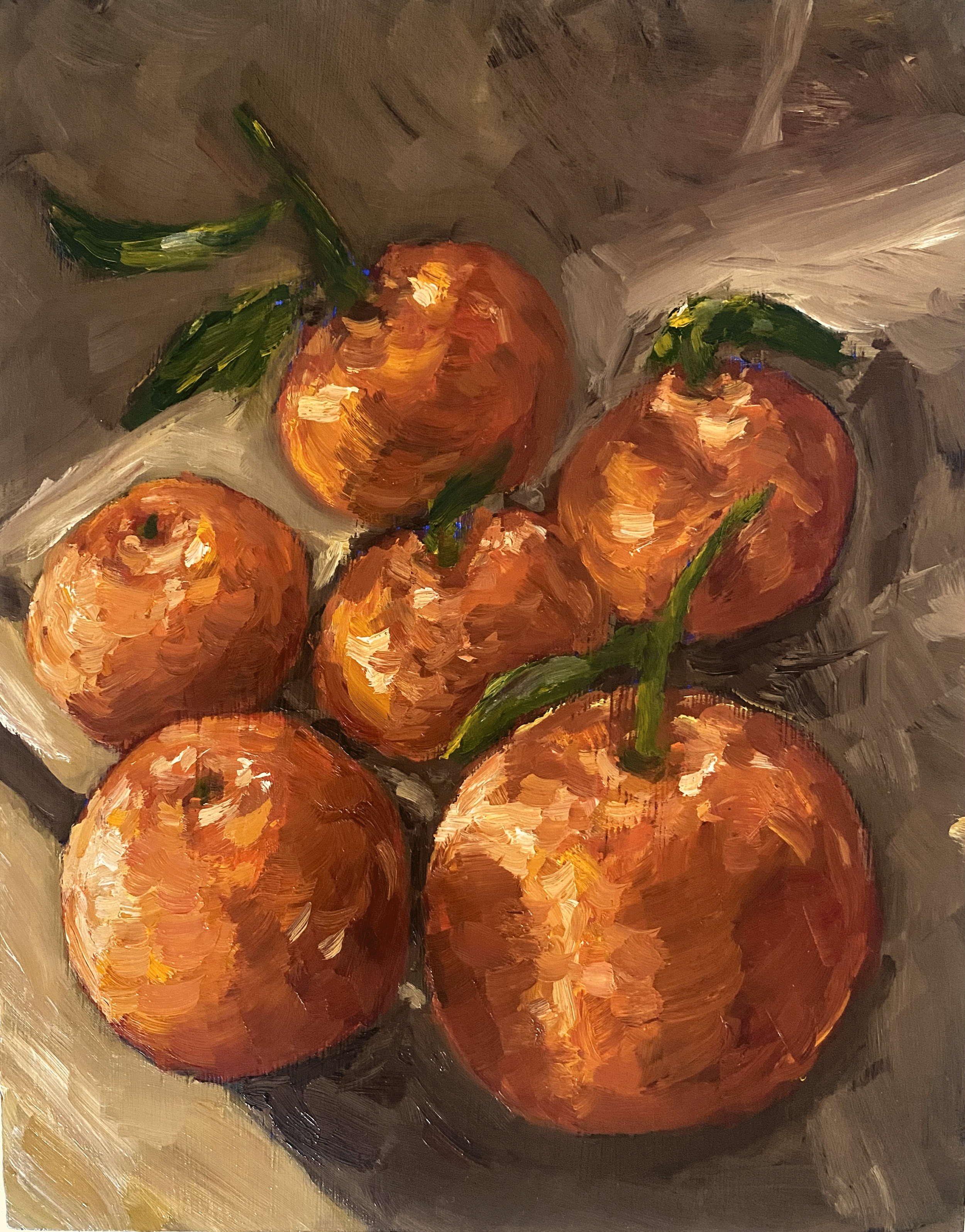
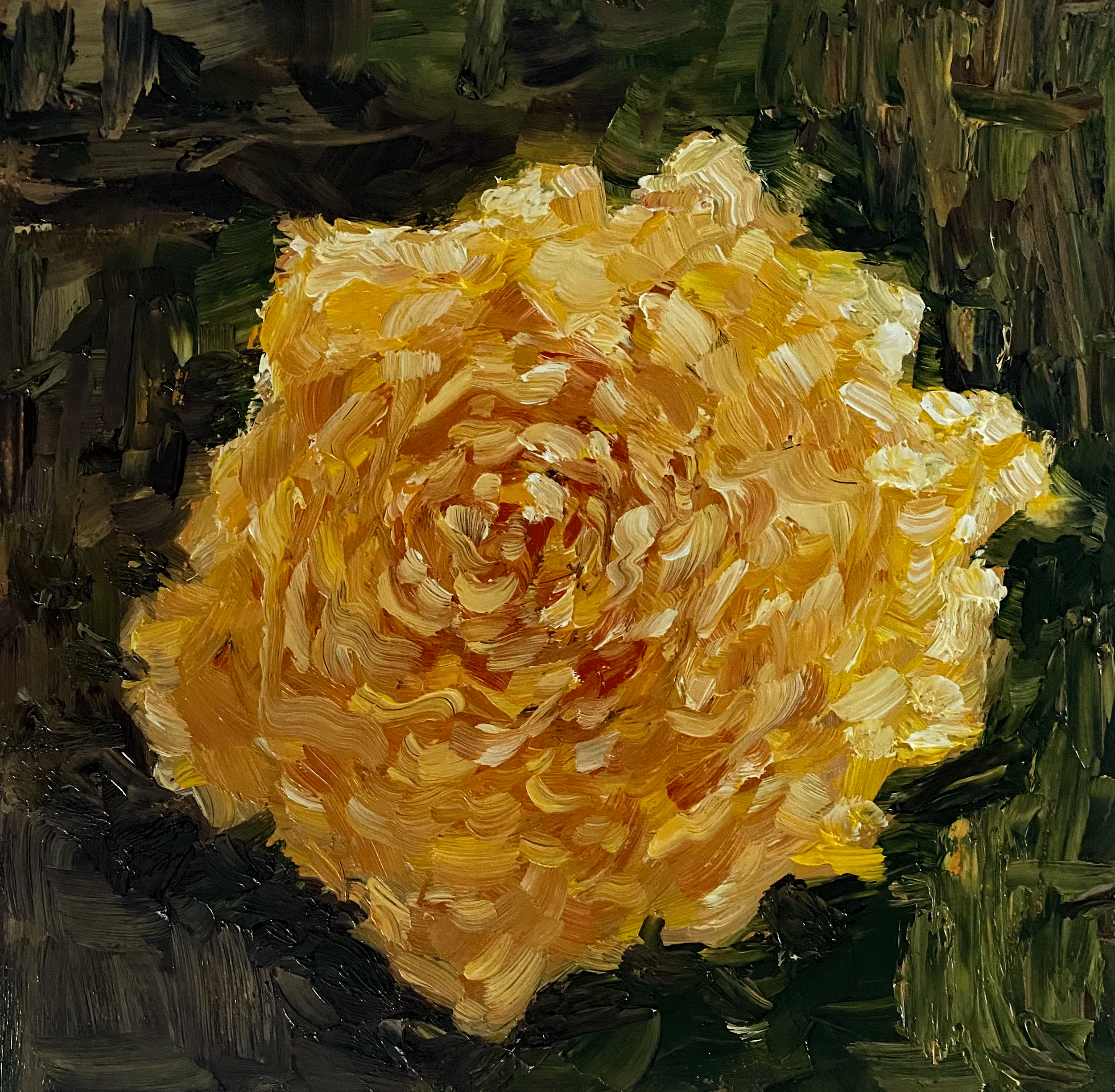
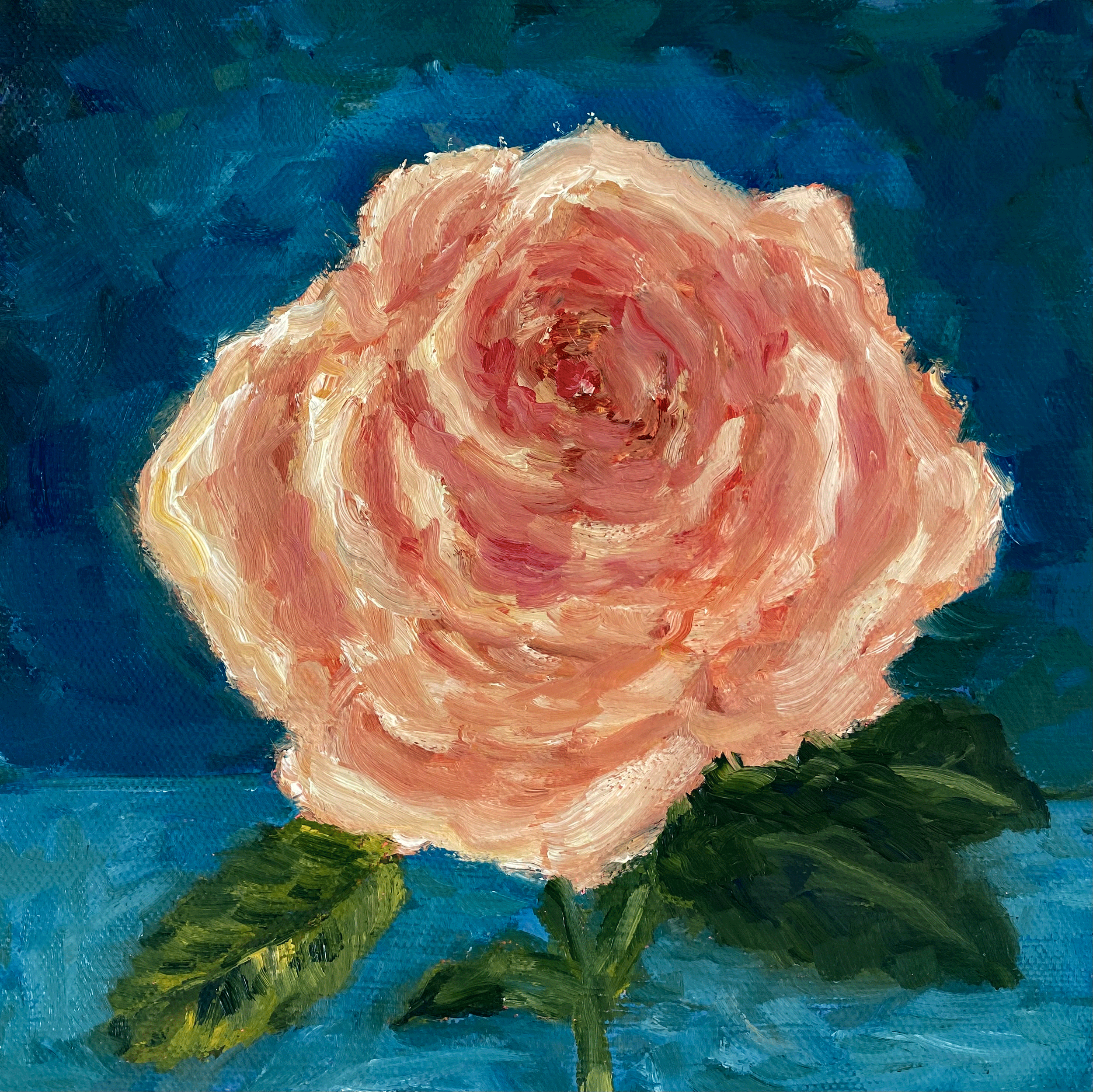
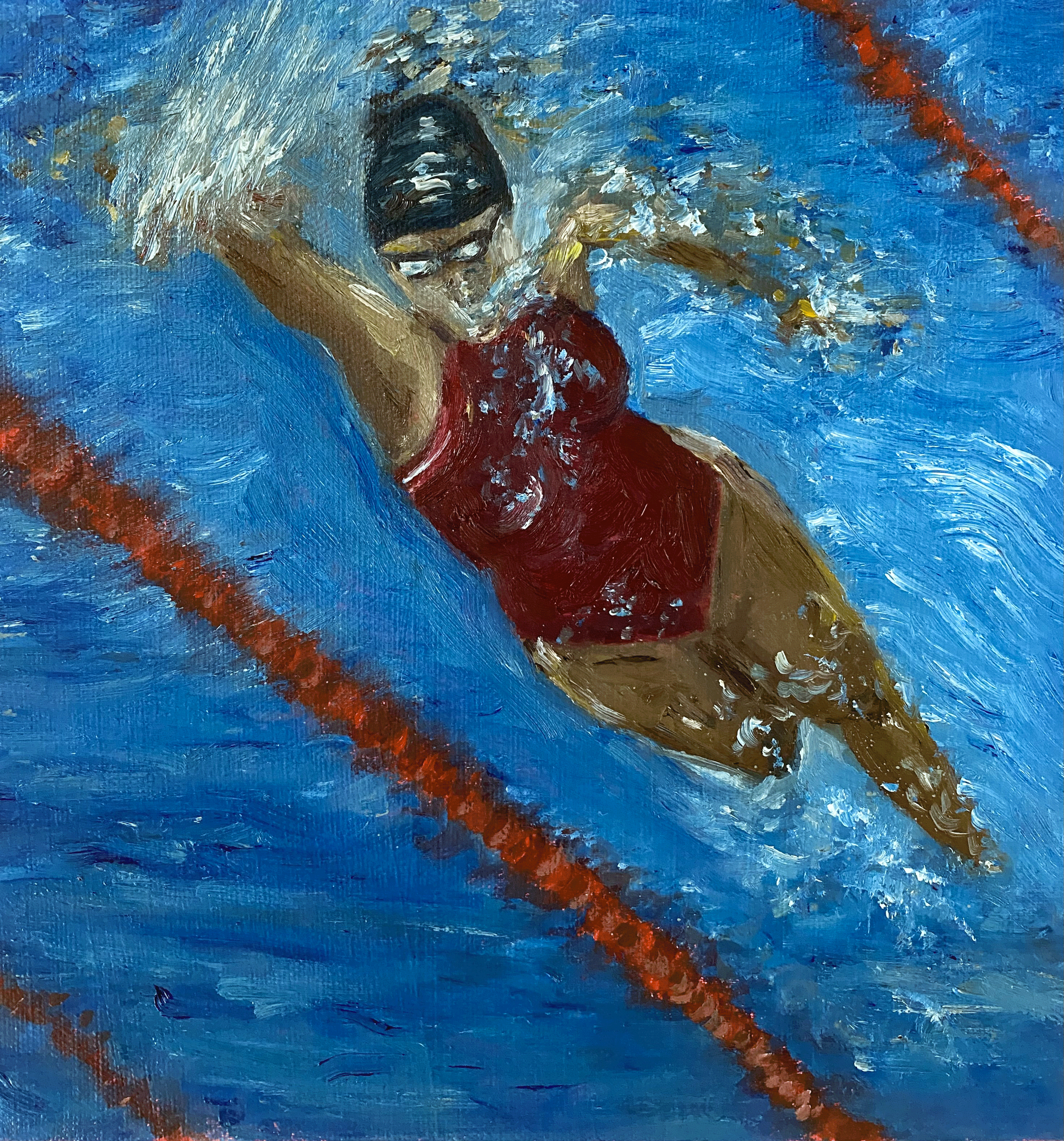
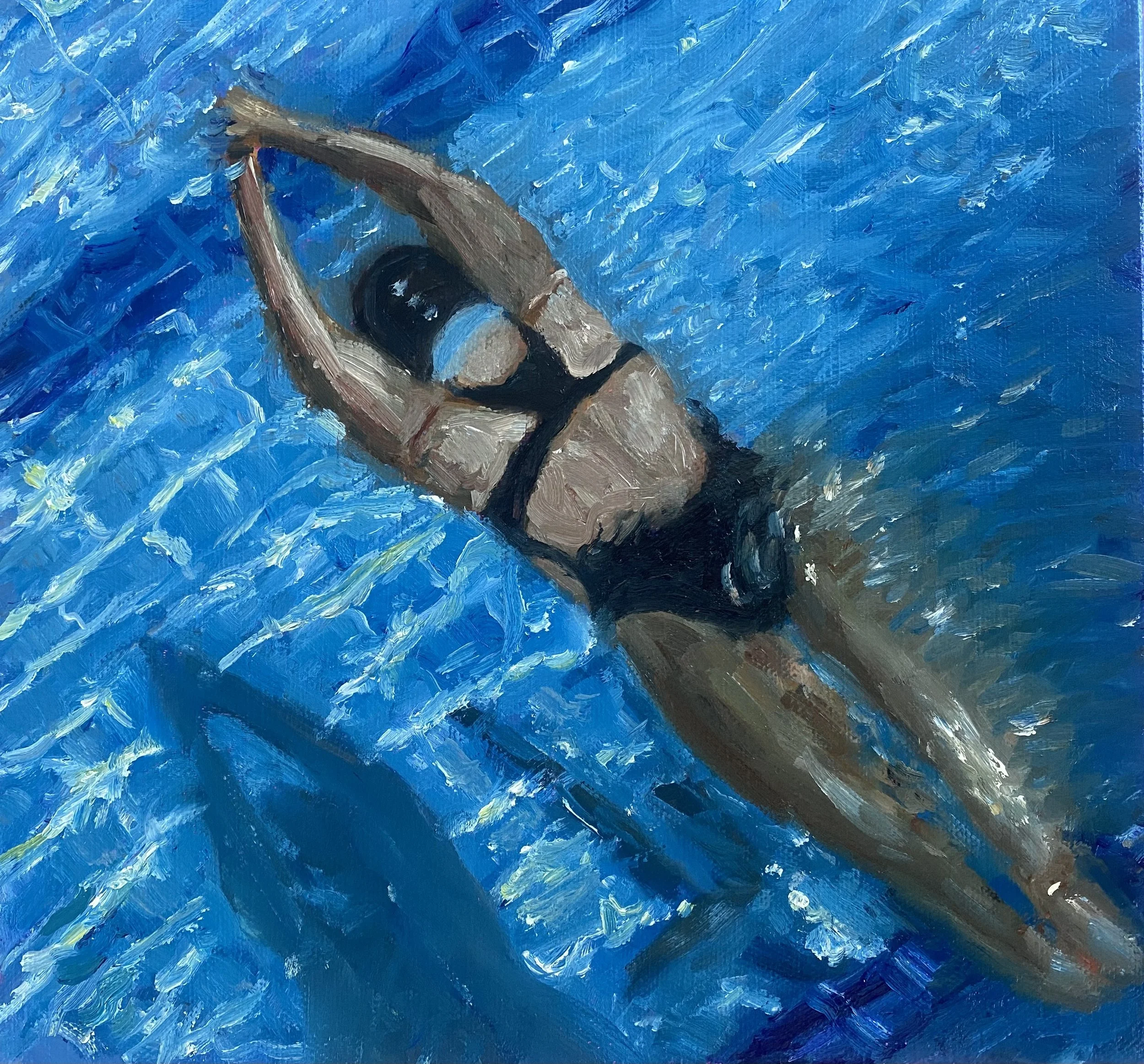
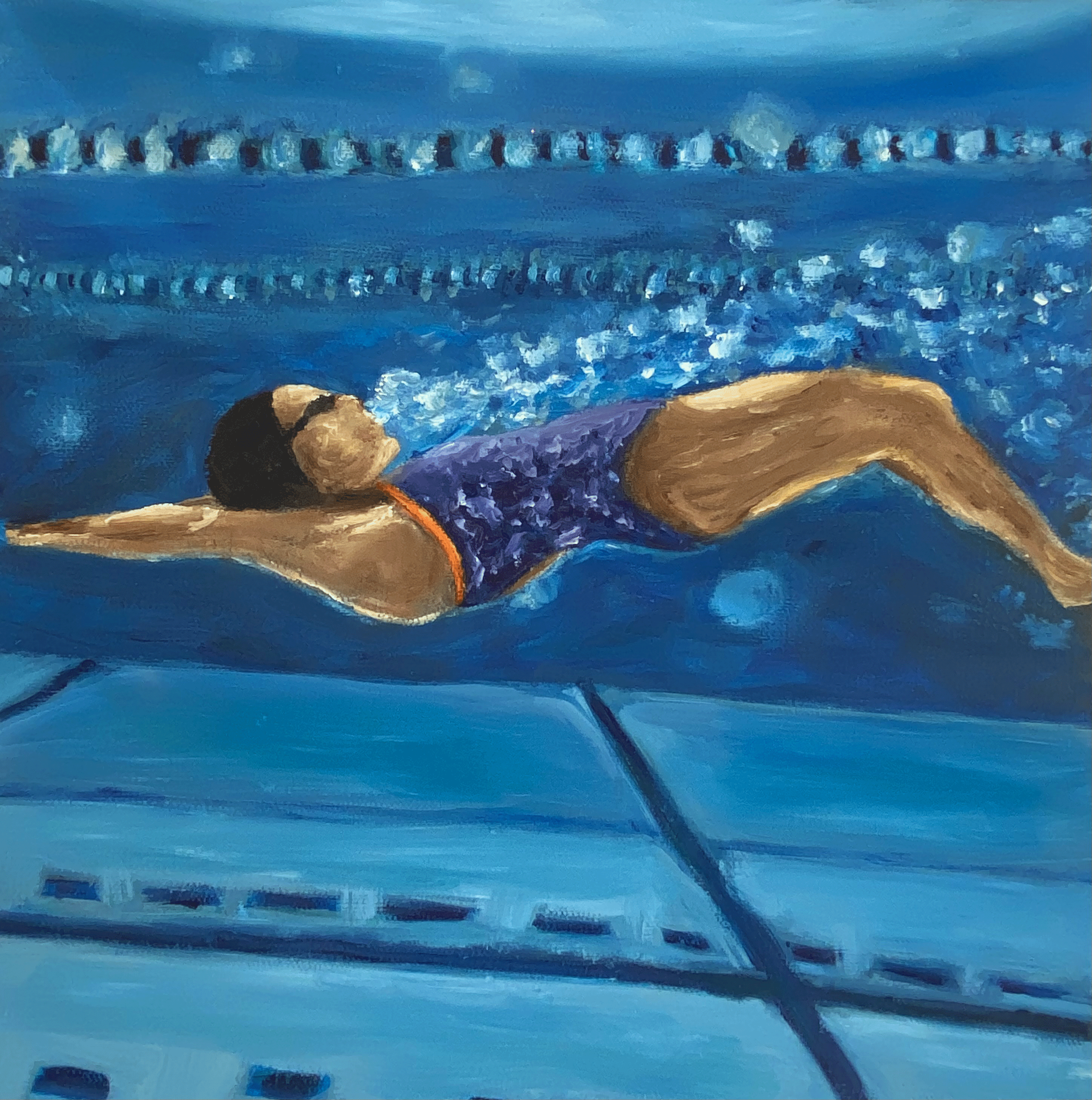
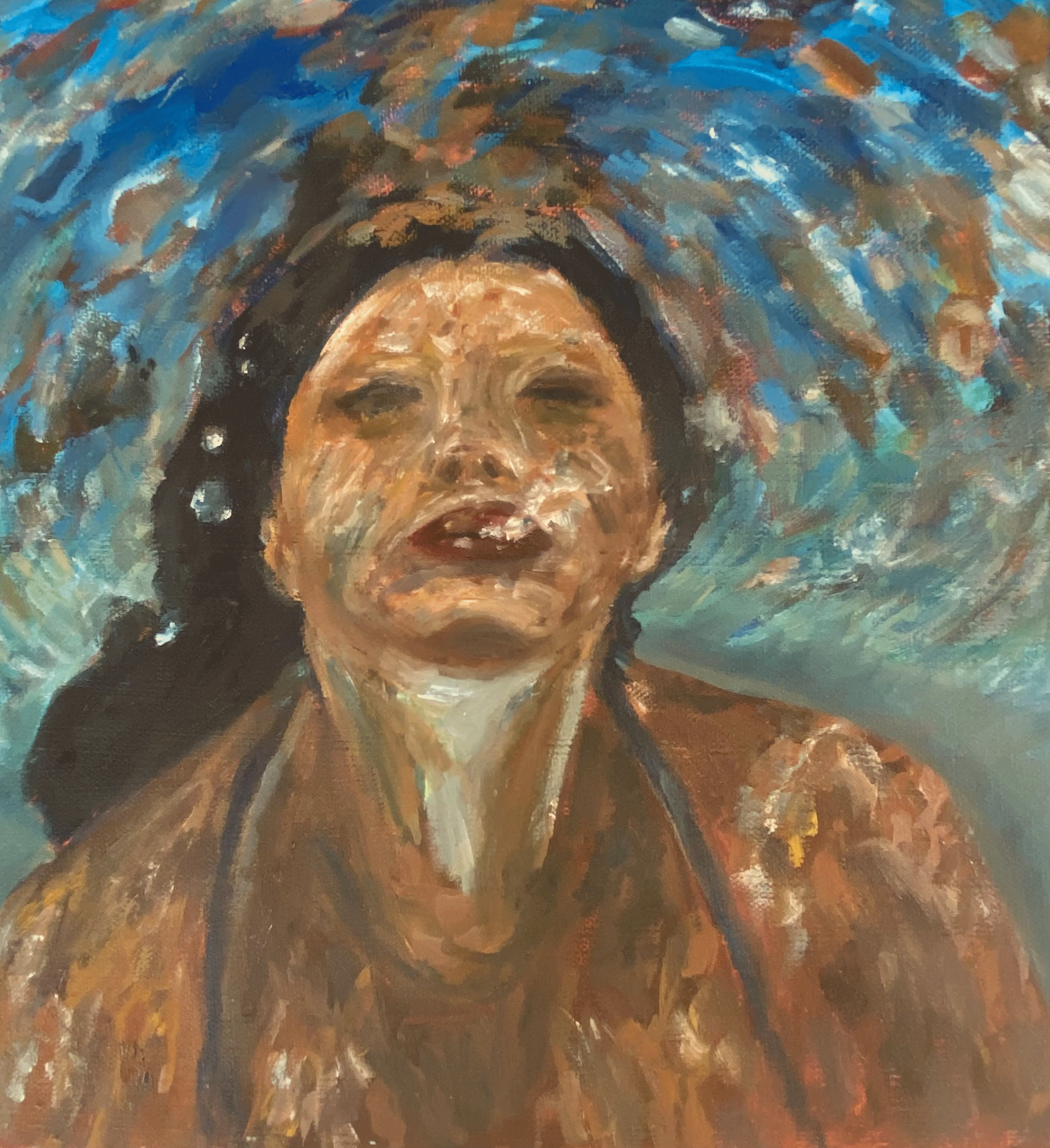
For January, I decided to work mostly in water mixable oils on canvas and wood panels. I wanted to get more comfortable with using oil paint, since my medium of choice has always been acrylic. Most of my subject matter is still life and food, whether it is the pancakes stacked on a plate that I made for my daughter and her cousin on New Year’s day, a beefsteak tomato I saw at the fruit and vegetable market, or a lobster on a plate while I was eating a lobster roll. By painting still life alla prima (in one sitting) , I wanted to practice the fat over lean concept of oil paint which is starting off with thin watered down layers of paint and then layering with thicker paint on top, and getting more saturated colors by avoiding too much mixing. I also wanted to simplify the painting process by focusing on just the darks and the lights. My brother once told me not to focus too much on the details, just identify where the darks and lights are and then adjust the mid tones accordingly. So I didn’t really focus too much on lines and getting exact shapes in, just the general shapes and the values. Also another tip I’ve heard other artists repeat is to achieve contrast and depth by making your darks darker and your lights brighter. Basically I tried to abstract as much as possible and loosen up my paintings in an attempt to avoid that “overworked” look. I also tried to avoid getting my colors muddy. This was not always easy because with oils where it’s better to keep the dark and light areas separate. However, I still had holdovers from my acrylic painting practice where I could easily layer over and cover up a mistake without too much mess. Whereas with oils, due to the nature of alla prima (in one sitting) or “wet on wet”, colors could get smeared and muddy very quickly if I tried to wipe away a mistake or paint over it. Also, I have a habit of changing elements of my composition midway and that can be problematic with oils. But all in all, over the course of 31 days, I did get more comfortable with oils, even enjoying the thick buttery texture, its easy spreadability and especially its vibrancy and deep saturated colors.
I worked mostly on canvas panels, stretched canvasses, gallery wrapped canvasses, wood panels and cradled wood boards, ranging from sizes 6x8”, 8x10” to 12x12”. With the exception of 2 paintings which I did in acrylic, the rest were done in water mixable oils. All are available for purchase on my shop, and my Daily Paint work (DPW) website, except for the last painting done on January 31, which was a study of another artist, Samantha French’s painting.